
12 Ways to Style Dark Trim Without Overwhelming Your Space
Dark trim has surged in popularity in recent years, offering a bold counterpoint to the all-white-everything trend that dominated interior design for so long. But let’s be real – working with black trim or dark woodwork can be intimidating. How do you incorporate these dramatic elements without making your space feel like a cave?
The good news is that dark trim can actually:
- Add architectural interest to otherwise plain rooms
- Create dramatic contrast that makes neutral walls pop
- Bring a sense of sophistication and timelessness to your space
- Frame your views and doorways like artwork
Ready to embrace the dark side (of trim, that is)? Let’s dive into 12 clever ways to incorporate black trim interior designs without overwhelming your space.
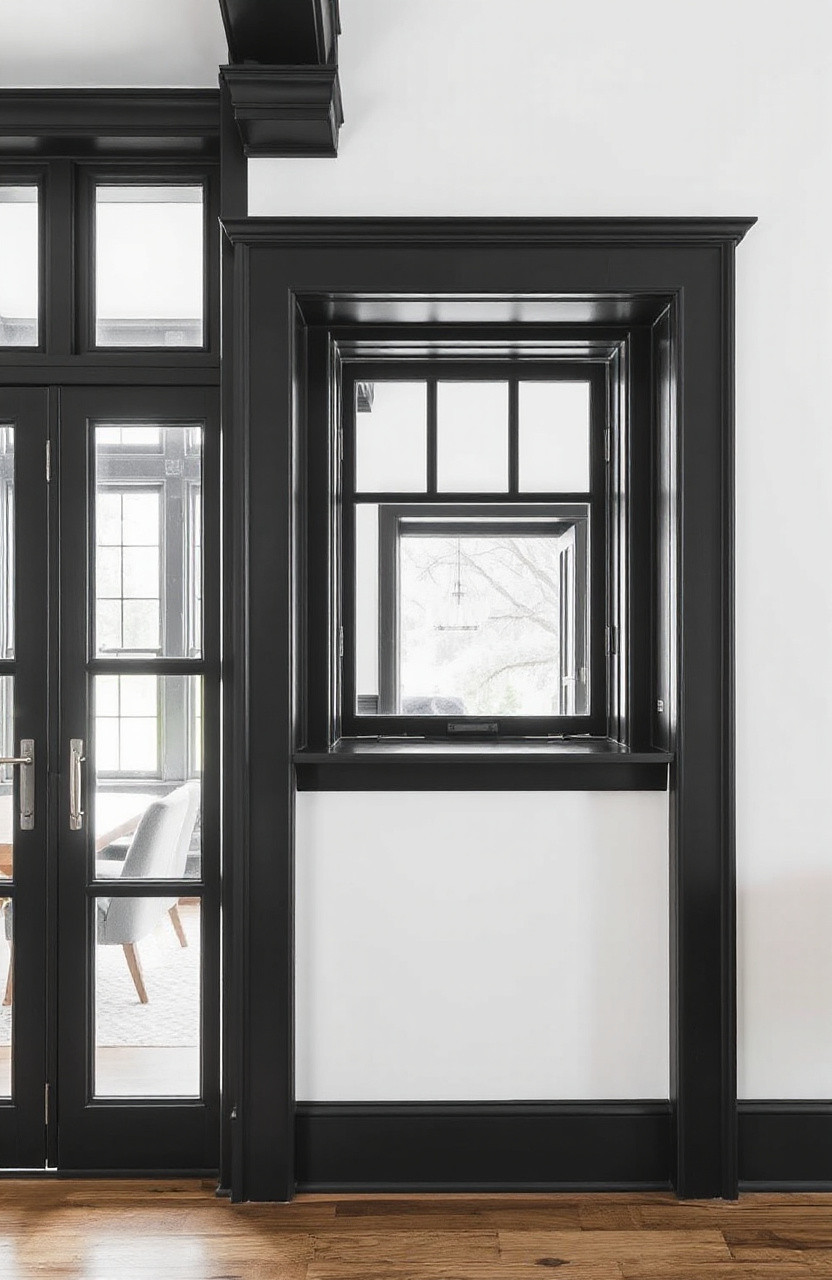
Pair Dark Trim with Light Walls for Classic Contrast
Nothing makes dark trim sing quite like the perfect contrast. Opt for crisp white or soft cream walls to create a striking visual framework. This high-contrast approach keeps spaces feeling airy while allowing the architectural details of your trim to stand out like a well-tailored suit.
When choosing your white, pay attention to undertones – cool whites create a more modern look with black trim, while warmer whites offer a softer, more traditional feel. And don’t be afraid to go bright white – the contrast will make your space feel bigger, not smaller.

Embrace Monochromatic Sophistication
For a thoroughly modern and cohesive look, try painting your trim and walls in the same dark color family. This creates a cocoon-like effect that’s both dramatic and surprisingly spacious-feeling. The key here is using different finishes – perhaps a matte finish on walls with semi-gloss or satin on the trim.
This approach works particularly well in:
- Home offices where a focused, den-like atmosphere is desirable
- Dining rooms where evening entertaining is the primary function
- Powder rooms where drama trumps practicality
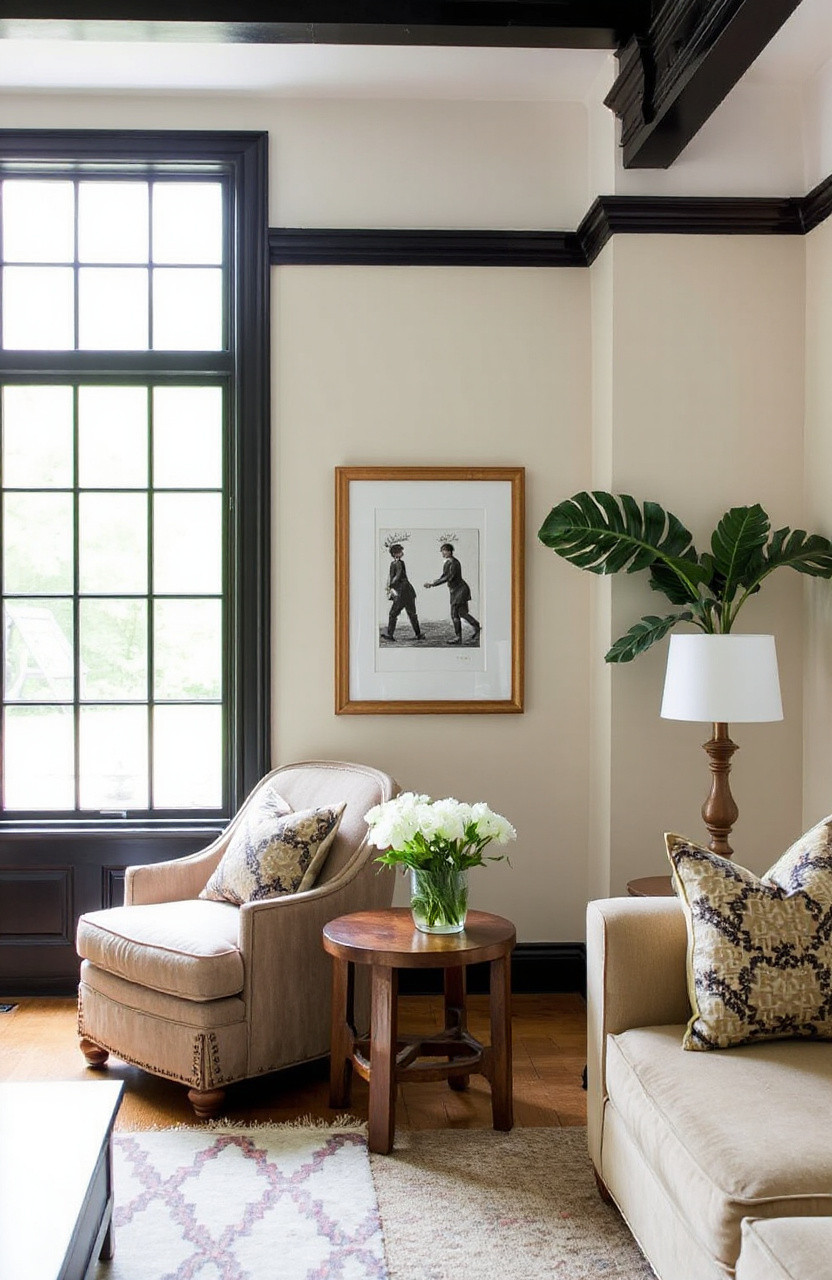
Let Your Furnishings Take Center Stage
When working with black trim home interior elements, think of your trim as the perfect picture frame. Choose furniture that contrasts with your dark trim – light upholstery, natural wood tones, or even colorful statement pieces that pop against the dark framework.
Consider a neutral backdrop with your dark trim serving as punctuation marks throughout the space. Then add 1-2 bold furniture pieces that become the stars of the show. This creates visual hierarchy and prevents any one element from overwhelming the room.

Strategic Use of Mirrors and Metallics
Dark trim can absorb light, so counterbalance this effect with reflective surfaces. Mirrors positioned opposite windows double your natural light, while metallic accents like brass, copper, or chrome catch and bounce light throughout the space.
Try these placements for maximum effect:
- A large mirror centered on the wall opposite your main window
- Clusters of smaller mirrors in varying shapes on a dark-trimmed wall
- Metallic picture frames that play off your dark trim
- Light fixtures with reflective finishes that complement your trim color

Incorporate Natural Elements for Balance
The organic warmth of natural materials creates perfect harmony with the structure of dark trim. Wood, stone, plants, and natural textiles soften the potential severity of black trim and ground the space.
This approach works especially well in transitional spaces like entryways or sunrooms where the connection between outdoors and indoors feels natural. A collection of potted plants against a wall with dark trim creates a stunning botanical display where the dark framework makes each plant stand out like living art.
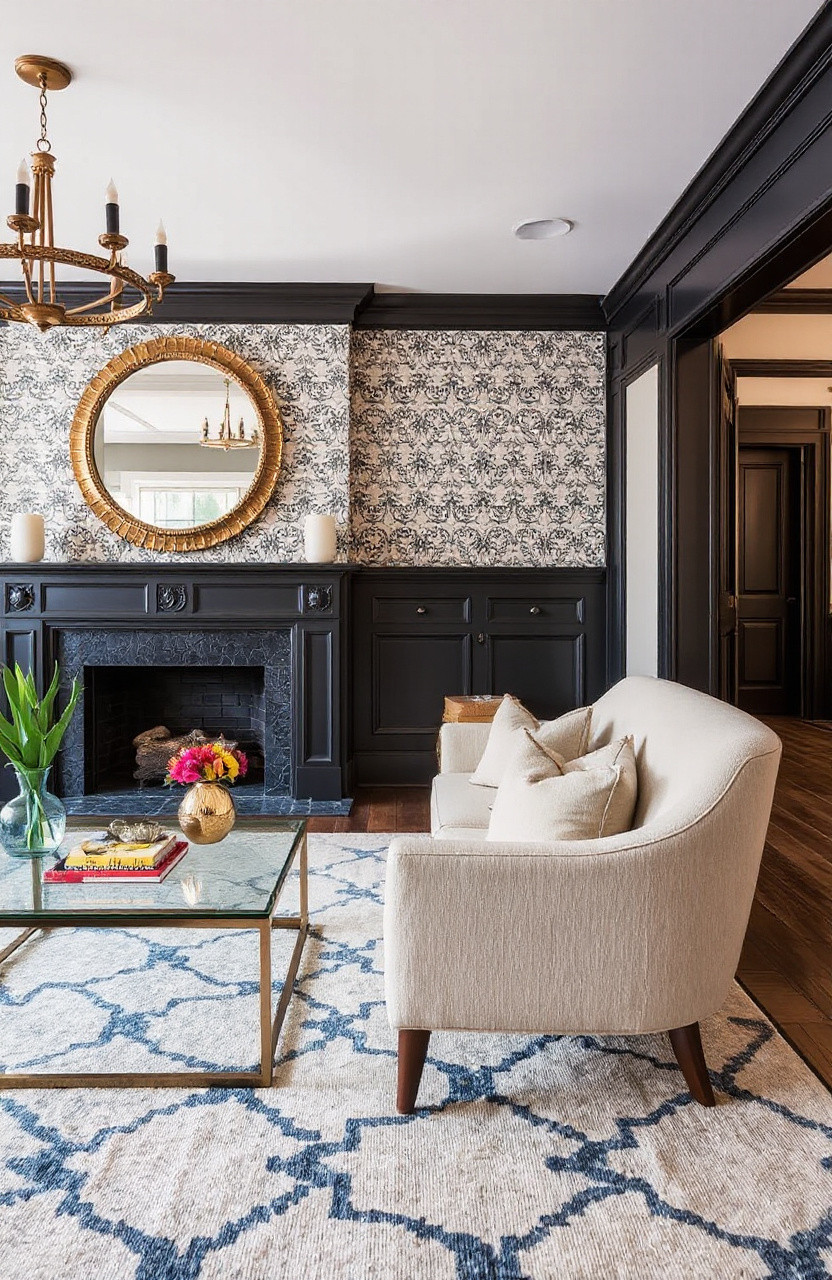
Play with Pattern to Distract from Heavy Trim
If you’re concerned about dark trim drawing too much attention, introduce compelling patterns into your space. Bold wallpaper, patterned rugs, or striking upholstery fabric can direct the eye exactly where you want it to go.
The key is balance – if your trim is thick and substantial, choose patterns with similar visual weight. Delicate patterns might get lost against heavy trim, while oversized patterns can hold their own and create a purposeful design statement.
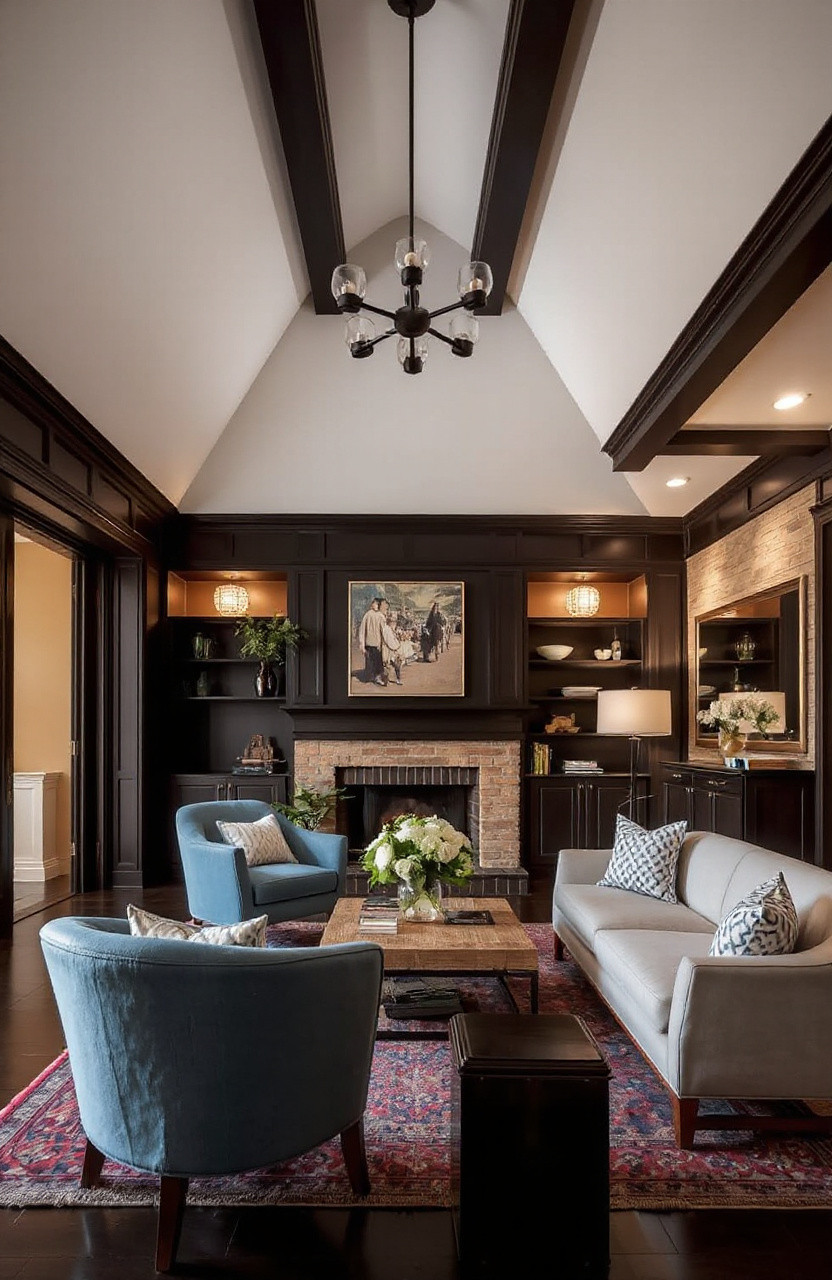
Layer Your Lighting Strategically
Good lighting is always important, but it becomes critical when working with dark trim. Create a layered lighting plan that includes:
- Ambient lighting from overhead fixtures to establish base illumination
- Task lighting where needed for reading, cooking, or other activities
- Accent lighting to highlight architectural features, artwork, or plants
- Decorative lighting that adds personality and sparkle
Wall sconces mounted directly onto dark-trimmed walls create a gorgeous effect as light washes up and down against the dark surface. This not only illuminates the space but transforms your trim into a design feature rather than just a functional element.

Consider the Fifth Wall – Your Ceiling
Your ceiling represents untapped design potential, especially when working with dark trim. While white ceilings are traditional and help spaces feel taller, don’t rule out being more adventurous.
Try painting your ceiling the same color as your walls for a cocooning effect, or use a lighter shade of your wall color to create subtle dimension. For the truly bold, a ceiling in a completely unexpected color can be stunning with dark trim serving as the transition point between walls and ceiling.
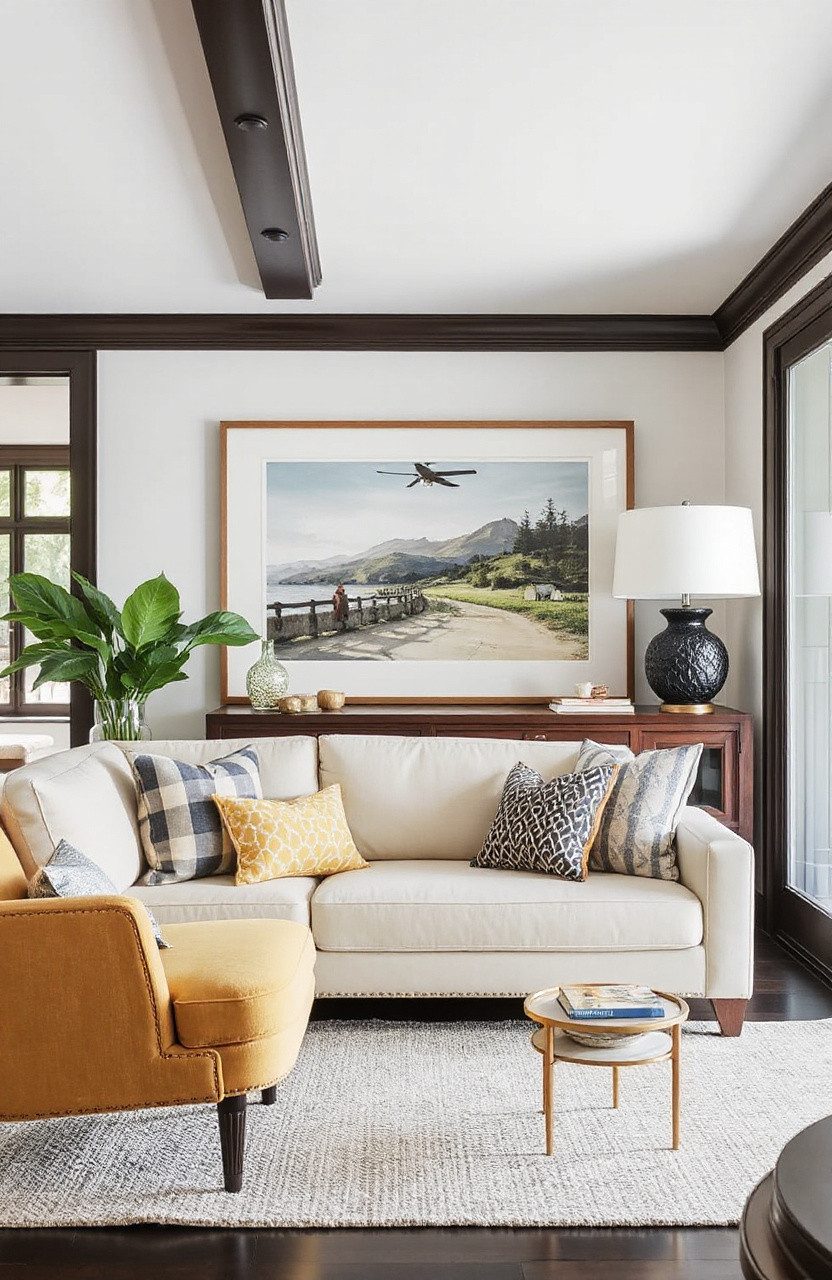
Create Visual Relief with Strategic Art Placement
Artwork provides crucial visual breaks in spaces with dark trim. Consider these approaches:
- Gallery walls with white or light-colored mats that create breathing room against dark trim
- Large-scale pieces that command attention and balance the visual weight of your trim
- Art with colors that pull from both your trim and wall colors to unify the space
When hanging art on walls with dark trim, consider the spacing carefully. You might need slightly more “breathing room” around pieces to prevent a crowded feeling – the dark trim already creates strong visual lines that can make tight arrangements feel cluttered.
Soften with Textiles and Layered Textures
Textiles are your best friend when balancing the hard edges of dark trim. Layer in a variety of textures to create depth and visual interest:
- Plush area rugs that anchor seating areas
- Window treatments that soften the rectangular frames of dark-trimmed windows
- Throw pillows and blankets in varying textures
- Upholstered furniture with tactile appeal
The contrast between soft textiles and the architectural definition of dark trim creates a balance that feels intentional and designed. Consider textiles with some sheen or subtle pattern to play against the solid nature of your trim.
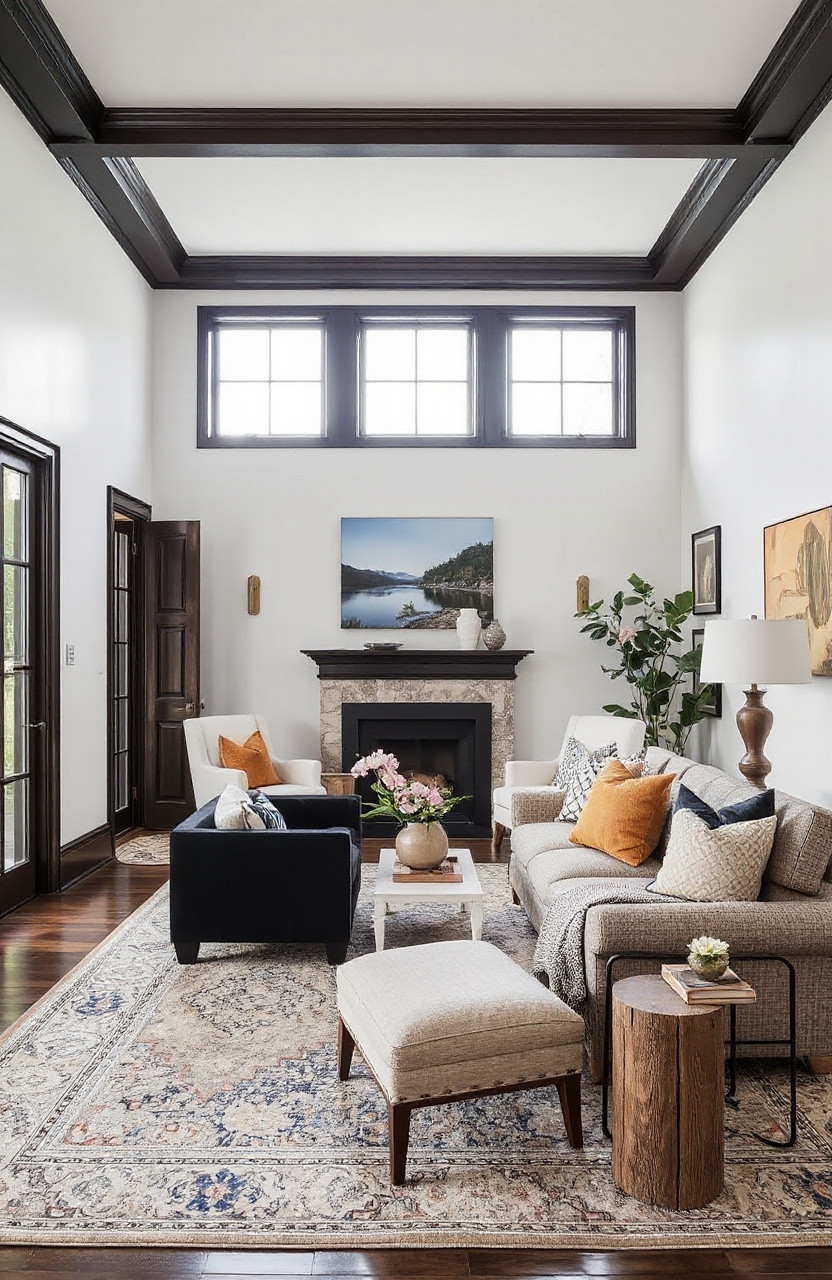
Use Dark Trim to Zone Your Space
In open-concept homes, dark trim can be strategically employed to define different functional areas without erecting walls. Use dark trim to frame:
- Doorways between different functional zones
- Ceiling transitions where one area meets another
- Architectural features that naturally divide spaces
This technique works particularly well in loft spaces or converted industrial buildings where dark trim feels authentic to the architecture while helping to create distinct zones within a larger space.

Mind the Undertones in Your Color Scheme
Not all dark trim is pure black – many homes feature dark brown, navy, or even dark green trim. Understanding the undertones in your particular trim is crucial for creating a cohesive color scheme.
For example:
- Dark brown trim with red undertones pairs beautifully with terracotta, rust, and warm neutrals
- Navy trim works well with cool grays, pale blues, and crisp whites
- Black-brown trim can bridge warm and cool palettes, working with almost any color scheme
Take time to observe your trim in different lighting conditions before committing to a full color scheme. What looks neutral black in daylight might reveal subtle undertones when bathed in evening lamplight.

Final Thoughts: Embracing the Drama Without the Darkness
Dark trim doesn’t have to mean dark rooms. By thoughtfully balancing contrast, light, texture, and color, you can create spaces that feel sophisticated and intentional rather than heavy or dated. The key is working with your trim rather than fighting against it.
Remember that dark trim has graced homes for centuries – from Victorian mansions to Craftsman bungalows to modern farmhouses. With these 12 strategies in your design toolkit, you can honor the architectural character of your home while creating spaces that feel fresh, balanced, and uniquely yours.
Don’t be afraid to experiment and trust your eye – sometimes the most striking interiors come from embracing elements that others might shy away from. Your dark trim might just become your favorite feature once you learn how to style around it.