
Small Space Home Office Solutions
Working from home used to be this dreamy concept. You’d roll out of bed, grab coffee in your pajamas, and somehow be more productive than ever.
Then reality hit.
Your dining table became a permanent desk. Important documents got mixed with grocery lists. And don’t even get me started on trying to look professional during video calls with laundry piles in the background.
Sound familiar?
You don’t need a sprawling home office to create a workspace that actually works. Even the tiniest corners can become productivity powerhouses with the right approach.
This isn’t about cramming everything into a closet and calling it done. It’s about smart design choices that make your small space work harder – and look better while doing it.
We’ll cover:
- Strategic furniture choices that pull double duty
- Vertical storage solutions that don’t scream “office supply explosion”
- Colors that actually boost your focus (backed by real science)
- How to create zones in spaces smaller than most people’s walk-in closets
Ready to transform that cramped corner into your most productive space yet?
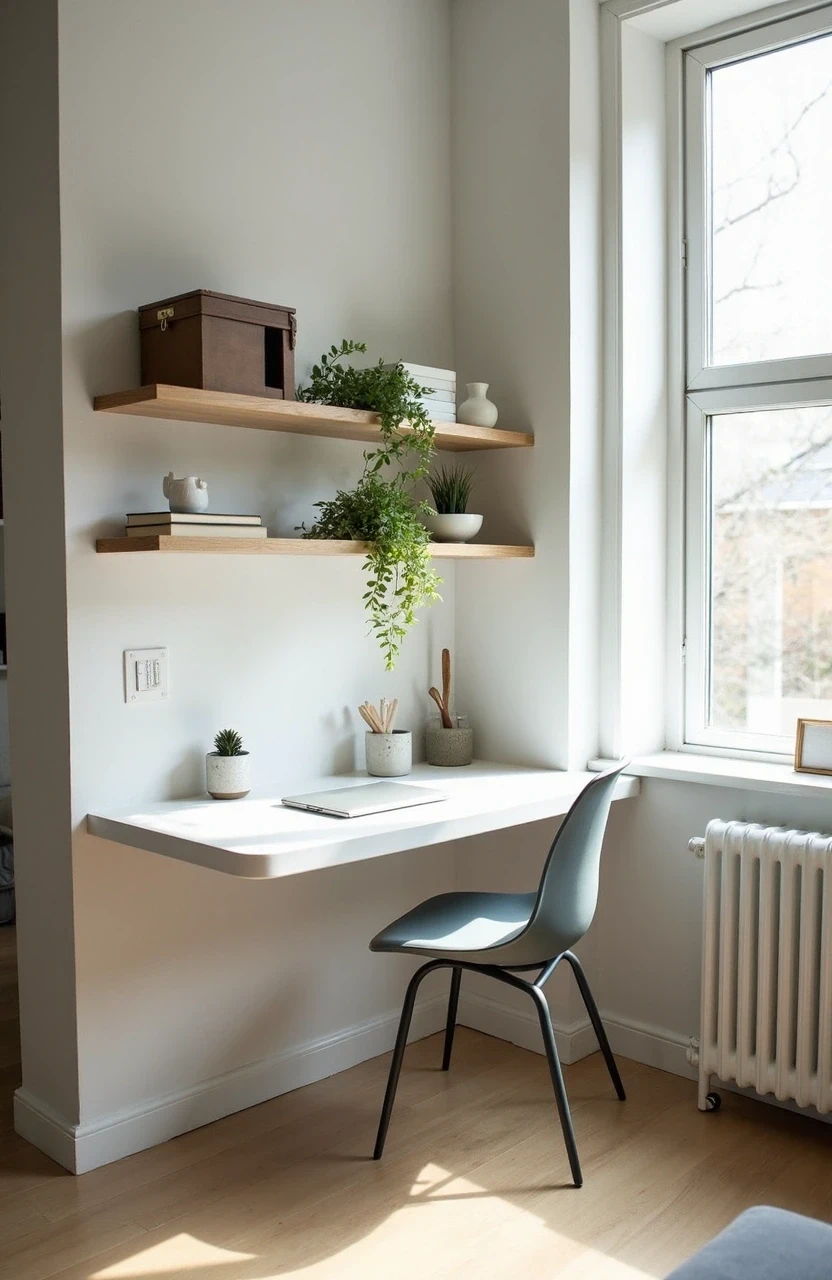
Small Home Office Solutions: Start with What You Actually Need
Before you start shopping for the cutest desk organizers, take a step back. What do you really need your office to do?
Be honest here. If you’re mainly answering emails and hopping on Zoom calls, your needs are different from someone who’s sketching designs or managing physical inventory.
Essential vs. Nice-to-Have Checklist:
- Computer/laptop space (essential)
- Storage for active projects (essential)
- Good lighting for video calls (essential)
- Filing system (depends on your work)
- Printer space (probably less essential than you think)
- Decorative items (nice-to-have, but can boost mood)
Here’s where most people go wrong: they try to recreate a traditional office in miniature. But small spaces require different rules.
Think vertical instead of horizontal. Consider furniture that transforms. And sometimes, the best small home office solutions involve breaking a few conventional design rules.
Your space might be small, but your thinking doesn’t have to be.
Furniture That Works Overtime in Compact Spaces
The secret to small home office solutions? Every piece needs to earn its place by doing multiple jobs.
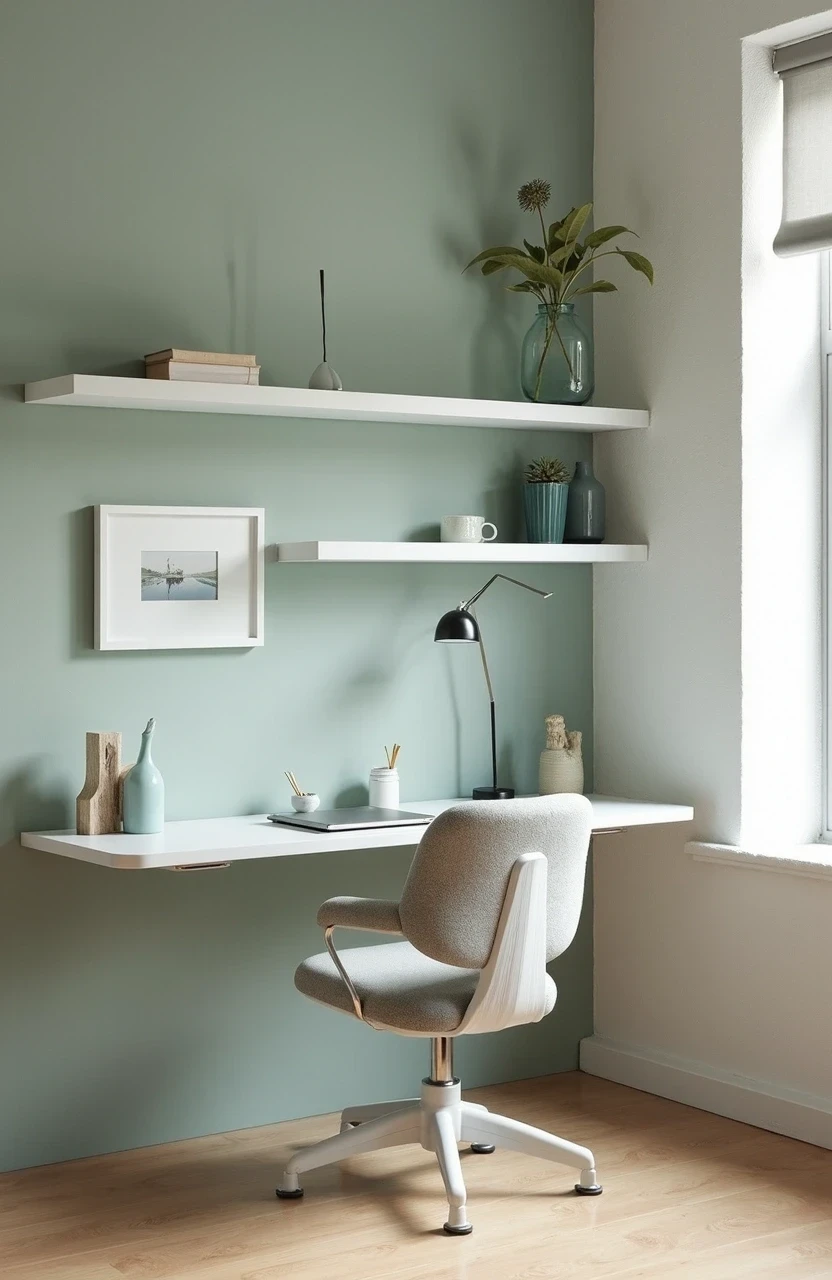
Wall-Mounted Desks
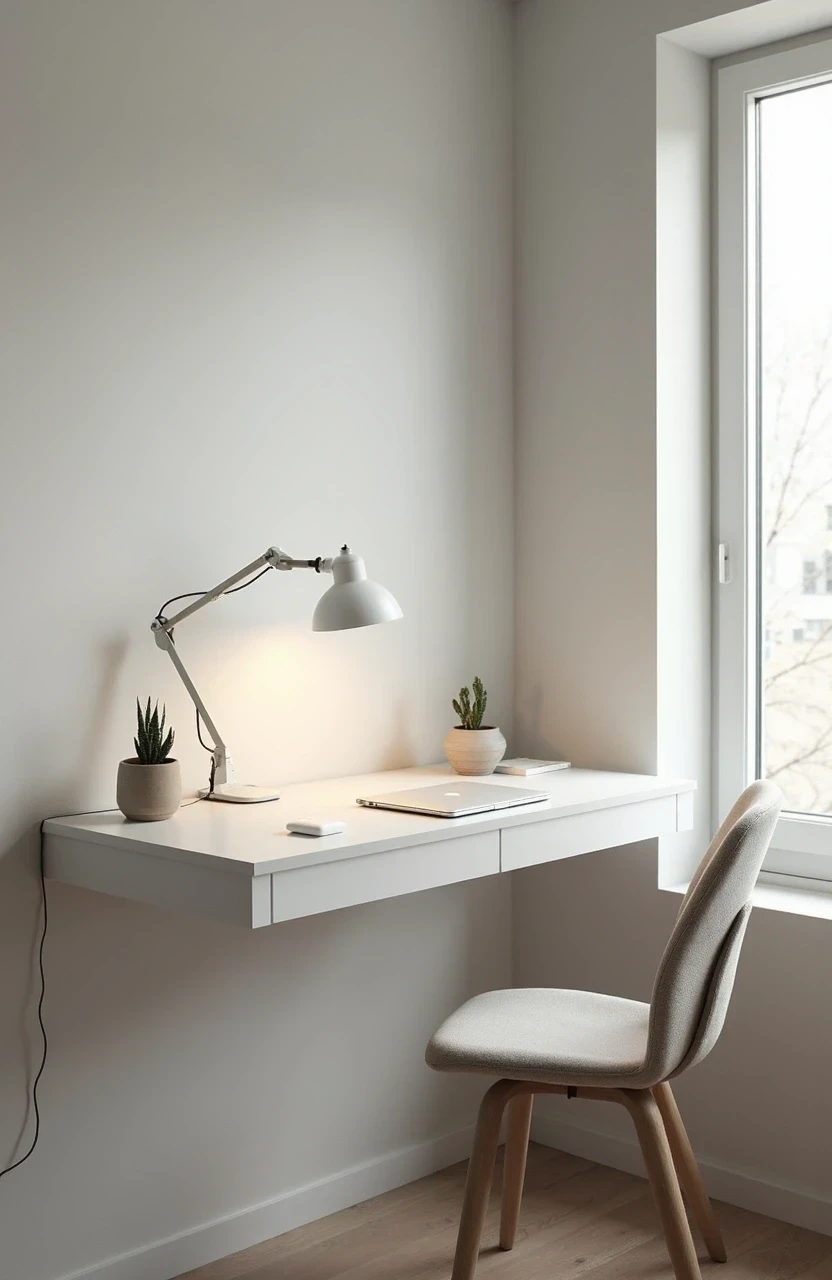
These aren’t just for dorm rooms anymore. Modern wall-mounted desks can be surprisingly sophisticated – and they free up floor space for storage underneath or simply make your room feel less cluttered.
Look for options with built-in shelving or ones that fold down when not in use. IKEA’s NORBERG table might look basic, but it’s saved countless small apartments from office chaos.
Storage Ottomans with Hidden Powers
An ottoman can serve as extra seating for video calls, a footrest during long work sessions, and storage for office supplies you don’t need daily access to.
Pro tip: Choose one in a fabric that coordinates with your existing decor. It should feel like furniture, not office equipment.
Nesting Tables for Flexible Workspace
Sometimes you need extra surface area for spreading out projects. Other times, you want that space back for yoga or just walking around without bumping into things.
Nesting tables slide away when you don’t need them but expand your workspace instantly when you do.
Bookcases as Room Dividers
If your “office” is actually a corner of your bedroom or living room, a tall, narrow bookcase can create visual separation without the commitment of a wall.
Choose one that’s open on both sides so light can flow through, and style the shelves with a mix of work supplies and decorative objects.
| Furniture Type | Primary Function | Secondary Function | Space Saved |
|---|---|---|---|
| Wall-mounted desk | Work surface | Folds away when not needed | 4-6 sq ft |
| Storage ottoman | Seating | Supply storage | 2-3 sq ft |
| Nesting tables | Extra work space | Tucks away completely | 3-4 sq ft |
| Room divider bookcase | Storage/privacy | Display space | Creates zones |
Vertical Storage Solutions That Don’t Look Like Office Supply Explosions
When you’re working with limited square footage, you’ve got to think upward. But vertical storage doesn’t have to look like a filing cabinet had a baby with a container store catalog.
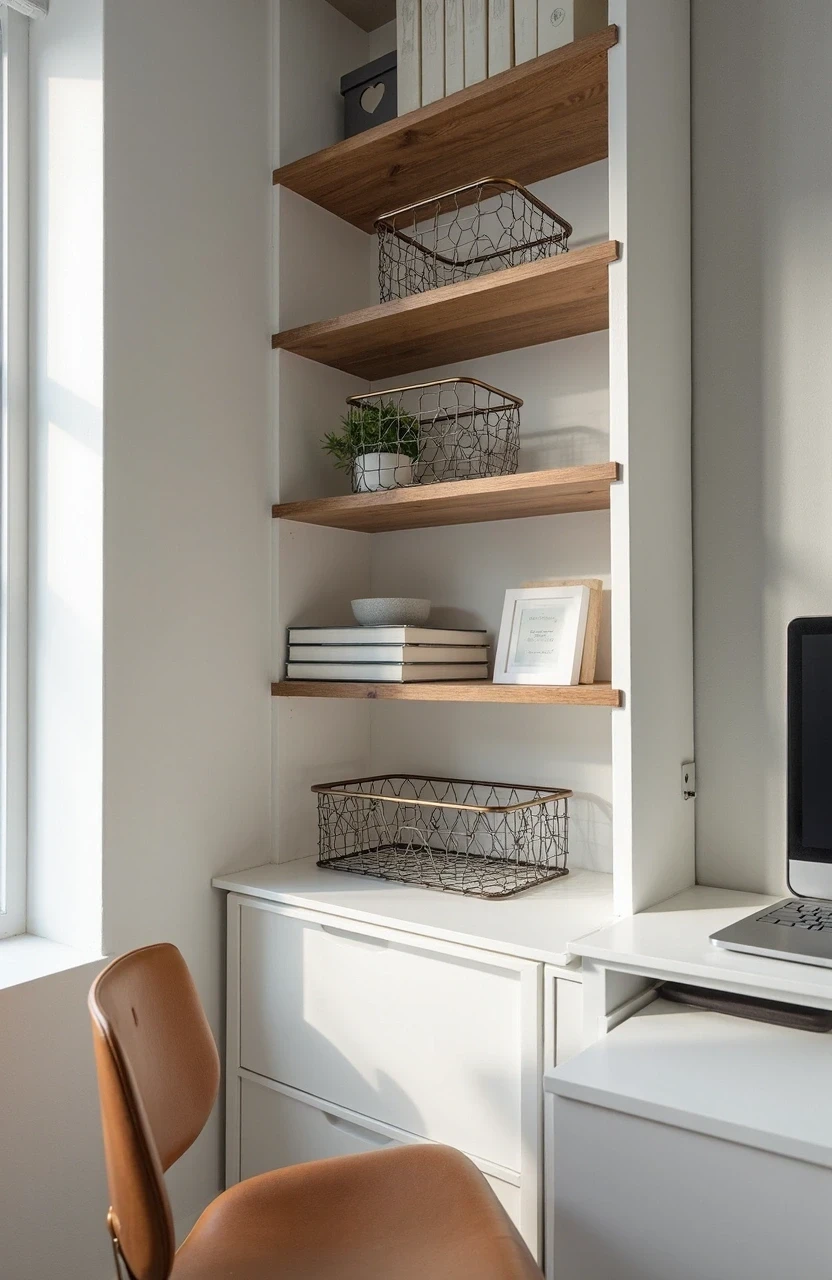
Floating Shelves with Style
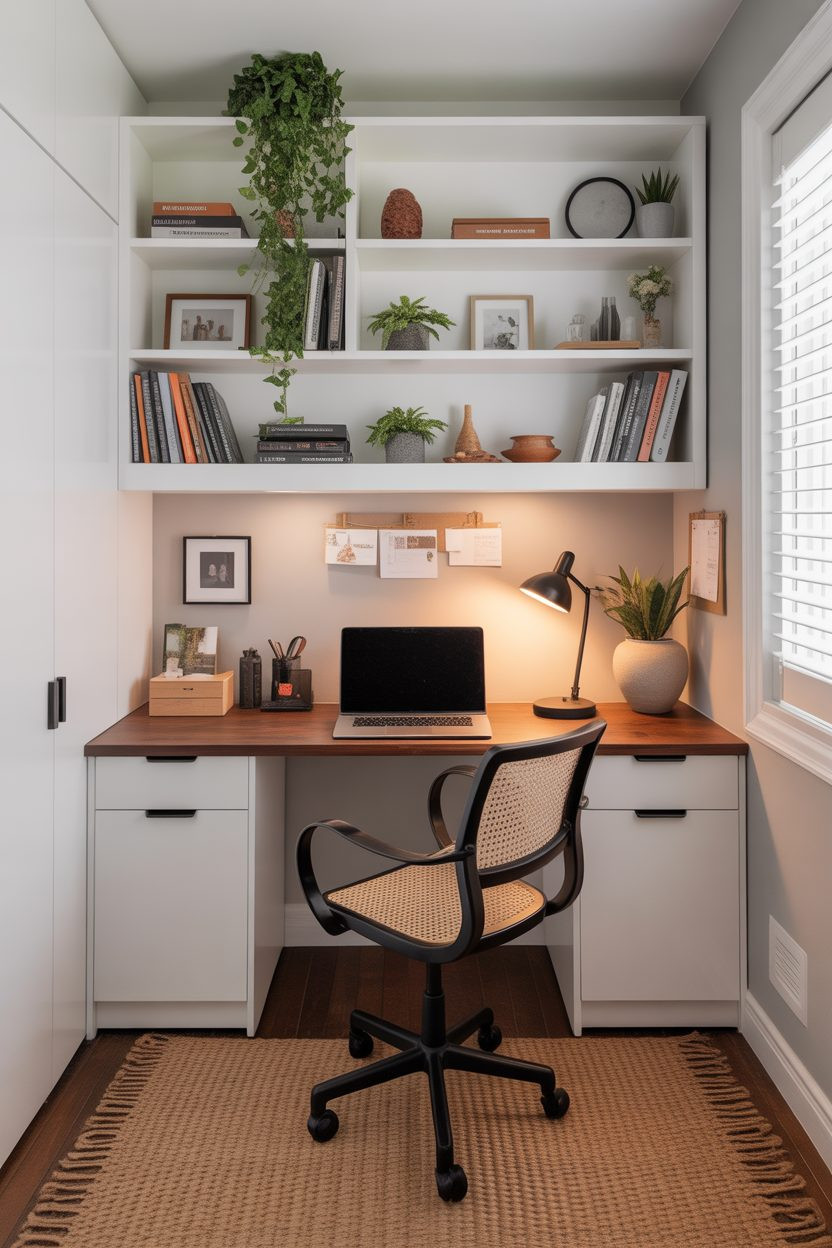
Install floating shelves above your desk, but style them thoughtfully. Mix practical storage with plants, photos, or small art pieces. The key is creating visual interest while keeping essentials within arm’s reach.
Use matching containers or baskets to corral smaller items. When everything has a designated spot, even open storage looks intentional rather than chaotic.
Pegboard Systems (But Make Them Chic)
Pegboards have gotten a major glow-up lately. Paint one to match your wall color for a subtle look, or go bold with a contrasting color that adds personality to your space.
The beauty of pegboards is their flexibility. Need to hang headphones, charging cables, or small plants? Just move the pegs around.
Behind-the-Door Storage
That space behind your office door (or bedroom door, if that’s where your office lives) is prime real estate. Over-the-door organizers can hold everything from files to office supplies to your good lighting ring for video calls.
Magnetic Boards for Visual Organization
If your desk area includes any metal surfaces – think filing cabinets or the side of your computer – magnetic organizers can hold everything from paper clips to your daily to-do list.
Choose magnetic containers in finishes that complement your decor. Copper, gold, or matte black options feel more intentional than basic office silver.
Colors That Boost Productivity and Focus
Here’s where science meets style. The colors in your small home office aren’t just about looking good – they’re actually affecting how well your brain works.
Blue: The Concentration Champion
Research from the University of British Columbia found that blue enhances performance on tasks requiring focus and attention to detail. It’s like caffeine for your concentration, minus the jitters.
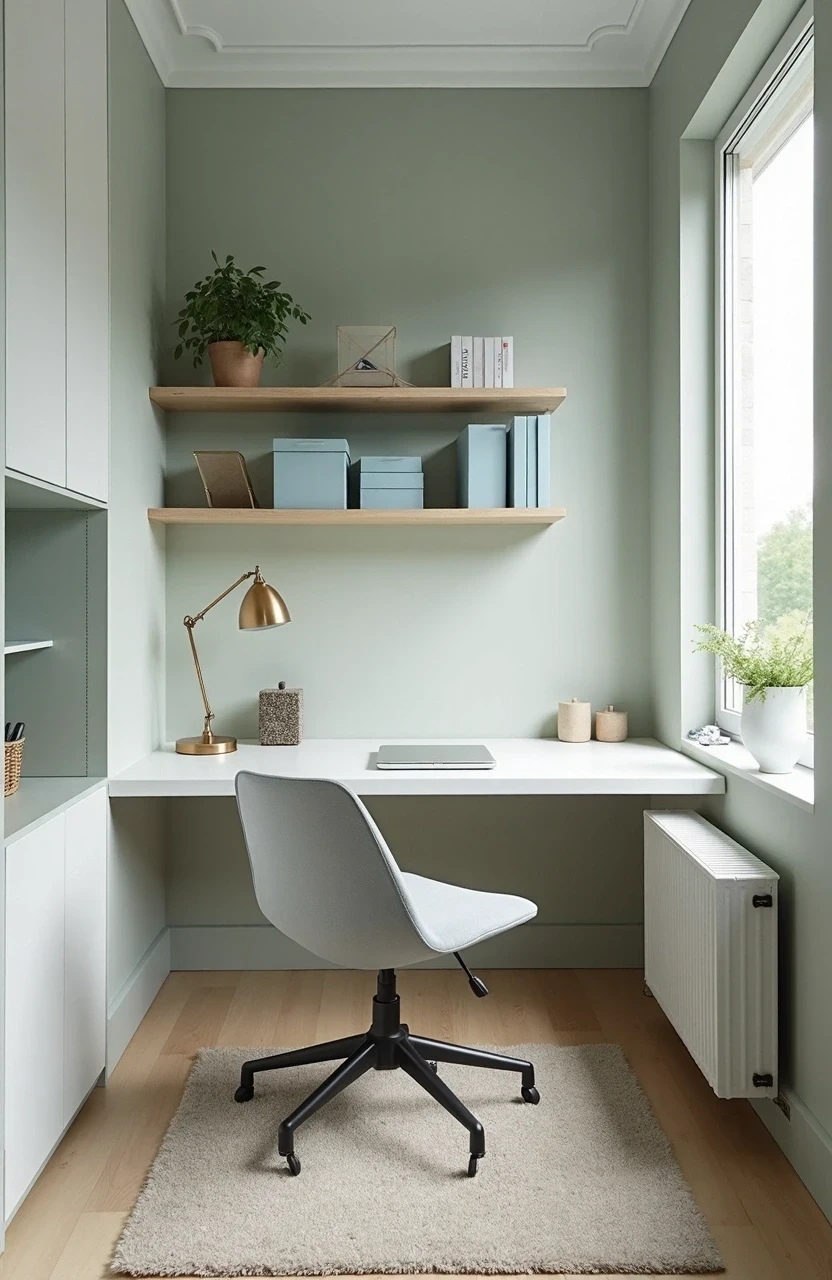
But we’re not talking about painting everything corporate blue. Try a soft blue-gray on an accent wall, or incorporate blue through accessories like desk organizers, artwork, or even a blue light filter for your computer.
Green: Nature’s Productivity Hack
Studies show that even looking at the color green can reduce eye strain and mental fatigue. It’s why so many successful offices incorporate plants – and why you should too.
If you can’t keep plants alive (no judgment), try green accents through artwork, a green desk pad, or even a small green throw pillow on your chair.
White and Light Gray: The Space Expanders
While pure white can sometimes feel sterile, warm whites and light grays can make small spaces feel larger while maintaining focus. They also reflect light better, which is crucial in small spaces that might not get tons of natural light.
What to Avoid for Focus
Red might be energizing, but it can also be distracting when you’re trying to concentrate. Same with bright orange or hot pink. Save these colors for areas where you want energy bursts, not sustained focus.
Colors for Video Calls
Since half your meetings probably happen on Zoom now, consider how your background colors look on camera. Soft blues, greens, and neutrals tend to be most flattering, while busy patterns or very bright colors can be distracting to others on the call.
Lighting Solutions for Productivity and Video Calls
Bad lighting can make even the most well-designed small office feel cramped and uninspiring. Good lighting? It’s like having a bigger space and better mood rolled into one.
Layer Your Light Sources
Don’t rely on one overhead light to do everything. You need:
- Task lighting for detailed work (desk lamp, under-cabinet lights)
- Ambient lighting for overall room brightness (floor lamp, ceiling fixture)
- Accent lighting to create visual interest (string lights, small table lamps)
The Video Call Setup
Position your computer so you’re facing a window, but not directly in front of one (unless you want to look like a silhouette). If natural light is limited, invest in a small ring light or LED panel that attaches to your computer.
Pro tip: Ring lights aren’t just for influencers. A small, adjustable one can be the difference between looking professional and looking like you’re calling from a cave.
Warm vs. Cool Light
Cooler light (around 4000K) can help with alertness and focus during the day. Warmer light (2700K-3000K) is better for reducing eye strain during evening work sessions.
Many modern LED bulbs let you adjust the temperature throughout the day, which can help maintain your natural circadian rhythms even when you’re working odd hours.
Creating Zones in Ultra Small Spaces
Even in a corner that’s barely big enough for a desk, you can create the feeling of different zones. It’s all about visual cues and smart arrangement.
Use Rugs to Define Areas
A small rug under your desk chair creates an instant “office zone,” even if your desk is in your bedroom or living room. Choose one that coordinates with your existing decor but has enough contrast to feel distinct.
Change the Wall Treatment
You don’t need to renovate. Sometimes just hanging a different piece of art or painting one wall a slightly different shade is enough to signal “this is the work area.”
Furniture Placement for Flow
Position your desk so you’re not facing a wall if possible. Looking out into the room (or toward a window) makes the space feel less claustrophobic and more integrated with your living area.
If you must face a wall, make it interesting. Gallery walls, floating shelves, or even just a large piece of art can give your eyes somewhere pleasant to land when you look up from your screen.
Sound Zones
In small spaces, sound management is crucial. A small white noise machine, soft background music, or even noise-canceling headphones can help create an auditory boundary between “work mode” and “home mode.”
Organization Systems That Actually Work Long Term
Pretty organizing systems are great for Instagram, but what matters is what still works three months from now when life gets busy.
The 80/20 Rule for Office Supplies
You probably use 20% of your office supplies 80% of the time. Keep that 20% within arm’s reach of your desk. Everything else can be stored further away or even in a different room.
Digital-First Filing
In small spaces, physical filing systems can quickly become overwhelming. Scan documents when possible and create a simple digital filing system. For papers you must keep, use a small file box rather than a full filing cabinet.
Weekly 10-Minute Reset
Set a timer for 10 minutes every Friday afternoon. Put things back where they belong, clear your desk surface, and prep for Monday. It’s much easier to maintain organization than to recreate it from chaos.
One In, One Out Rule
Every time you bring something new into your office space, something else should leave. This prevents the gradual accumulation of stuff that makes small spaces feel cramped.
Making Your Small Office Feel Intentional, Not Cramped
The difference between a small office that feels cozy and one that feels cramped often comes down to intention. Every element should feel like it belongs.
Embrace Scale Appropriately
Don’t try to cram full-sized furniture into a small space, but don’t go so small that everything looks like dollhouse furniture either. Choose pieces that are proportional to your space and your needs.
Create Visual Interest at Eye Level
When you’re sitting at your desk, what do you see? Make sure there’s something pleasant to look at – artwork, a small plant, or even just a nicely organized shelf.
Leave Some Empty Space
Counter-intuitive as it sounds, leaving some surfaces clear actually makes a small space feel larger. Not every inch needs to be utilized.
Choose a Cohesive Color Palette
Stick to 3-4 colors max throughout your office area. This creates harmony and prevents the space from feeling chaotic or busy.
When you walk into your small office area, you should feel focused and calm, not overwhelmed or claustrophobic. If you don’t, it’s worth adjusting until you do.
Your Small Space, Big Results
Creating a functional home office in minimal square footage isn’t about having the perfect space – it’s about making your space work perfectly for you.
The best small home office solutions are the ones you’ll actually use six months from now, when the novelty has worn off and you just need to get work done. Choose pieces that serve multiple functions, organize systems that require minimal maintenance, and colors that make you feel focused rather than frazzled.
Your productive workspace is waiting – it just might be smaller and smarter than you originally imagined.