
How to Select the Perfect Living Room Wallpaper
Picture this: you’re scrolling through Instagram, and that one living room stops you mid-swipe.
The furniture is nice, sure. But it’s the walls that make you hit save.
That’s the power of choosing the right living room wallpaper. It’s not just decoration – it’s the difference between a room that feels complete and one that feels like it’s missing something you can’t quite put your finger on.
Here’s what we’re covering:
- Understanding your space and lighting
- Navigating patterns without losing your mind
- Color psychology that actually works
- Practical considerations (because real life happens)
- Installation tips that’ll save your sanity
Ready to transform your living room from “fine” to “magazine-worthy”? Let’s dive in.

Understanding Your Living Room’s Personality
Before you fall head-over-heels for that botanical print, take a step back. Your living room has its own personality – and like any good relationship, you need to work with it, not against it.
Room size matters more than you think. Small living rooms can handle bold patterns, but here’s the trick: they need breathing room elsewhere. If you’re going dramatic on the walls, keep your furniture and accessories relatively simple. It’s like wearing a statement necklace – you don’t need statement earrings too.
Large living rooms? You’ve got options. You can go subtle and sophisticated, or you can make a grand gesture. Just remember that in bigger spaces, tiny patterns can look lost. Think of it as the design equivalent of whispering in a stadium.
Lighting is your secret weapon. North-facing rooms that get cooler light can handle warmer wallpaper tones beautifully. South-facing rooms with lots of warm sunlight? They’re perfect for cooler blues and greens that might look stark elsewhere.
And here’s something most people don’t consider: your living room’s function. Is this where you host dinner parties, or where you collapse after long days? Entertainment spaces can handle more energy and pattern. Relaxation zones might call for something more serene.

Decoding Wallpaper Patterns Like a Pro
Patterns can feel overwhelming, but they’re really just visual languages once you know how to read them.
Geometric patterns are having their moment – and for good reason. They feel modern without being trendy, sophisticated without being stuffy. Think hexagons, subtle stripes, or abstract shapes. They work especially well if your furniture has clean lines.
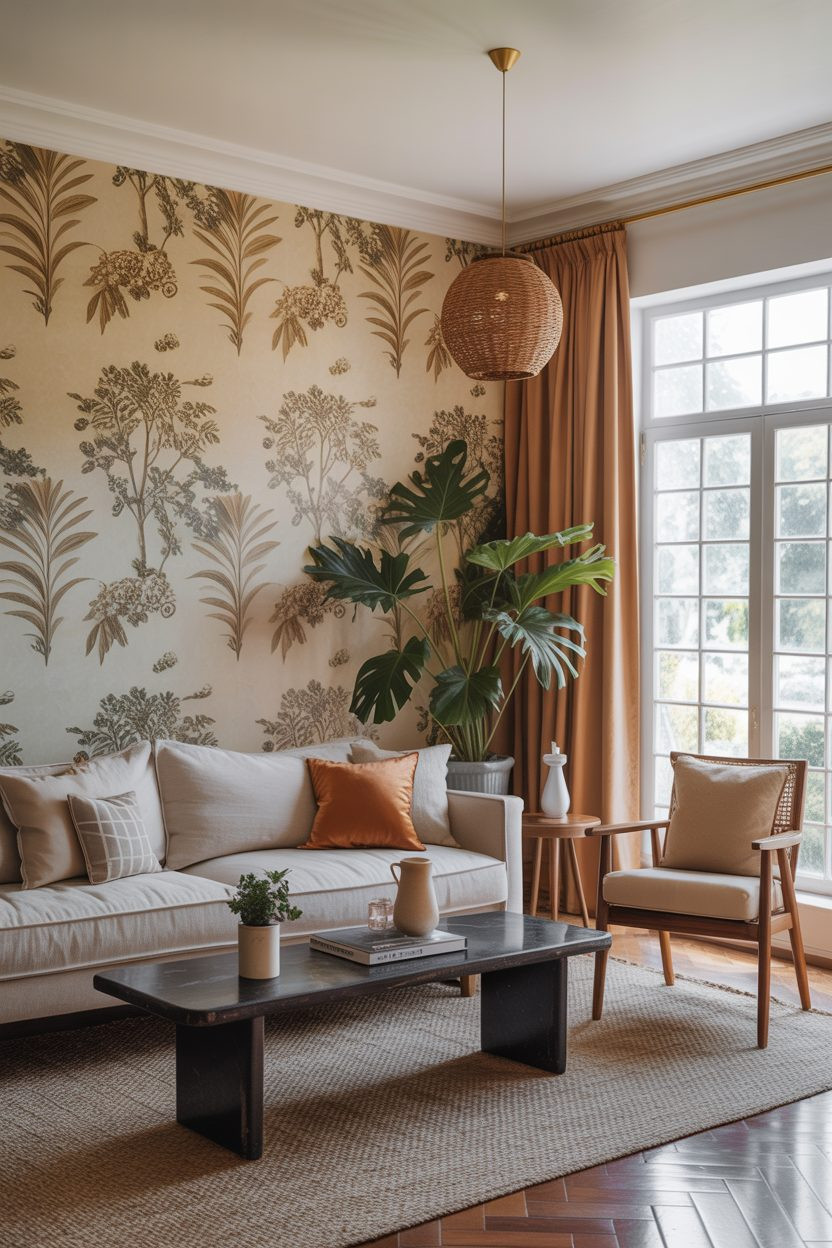
Floral patterns aren’t your grandmother’s roses anymore. Today’s florals range from oversized tropical leaves to delicate line drawings that look almost architectural. The key? Scale and style. Large florals make a room feel intimate, while small florals can feel busy if you’re not careful.
Textural patterns are the introverts of the wallpaper world. They add depth and interest without shouting about it. Think grasscloth, faux brick, or subtle damask. These are perfect if you want richness without pattern-commitment.
Here’s a pattern guide that actually makes sense:
| Pattern Type | Best For | Avoid If |
|---|---|---|
| Large Geometric | High ceilings, modern furniture | Room feels cramped |
| Small Geometric | Creating texture, traditional spaces | You want drama |
| Large Floral | Making a statement, spacious rooms | Furniture is already busy |
| Small Floral | Cozy, cottage feel | Room is small and dark |
| Textural | Adding depth, neutral schemes | You want color impact |
The Psychology of Living Room Colors
Color isn’t just about what looks pretty – it’s about how you want to feel in your space.
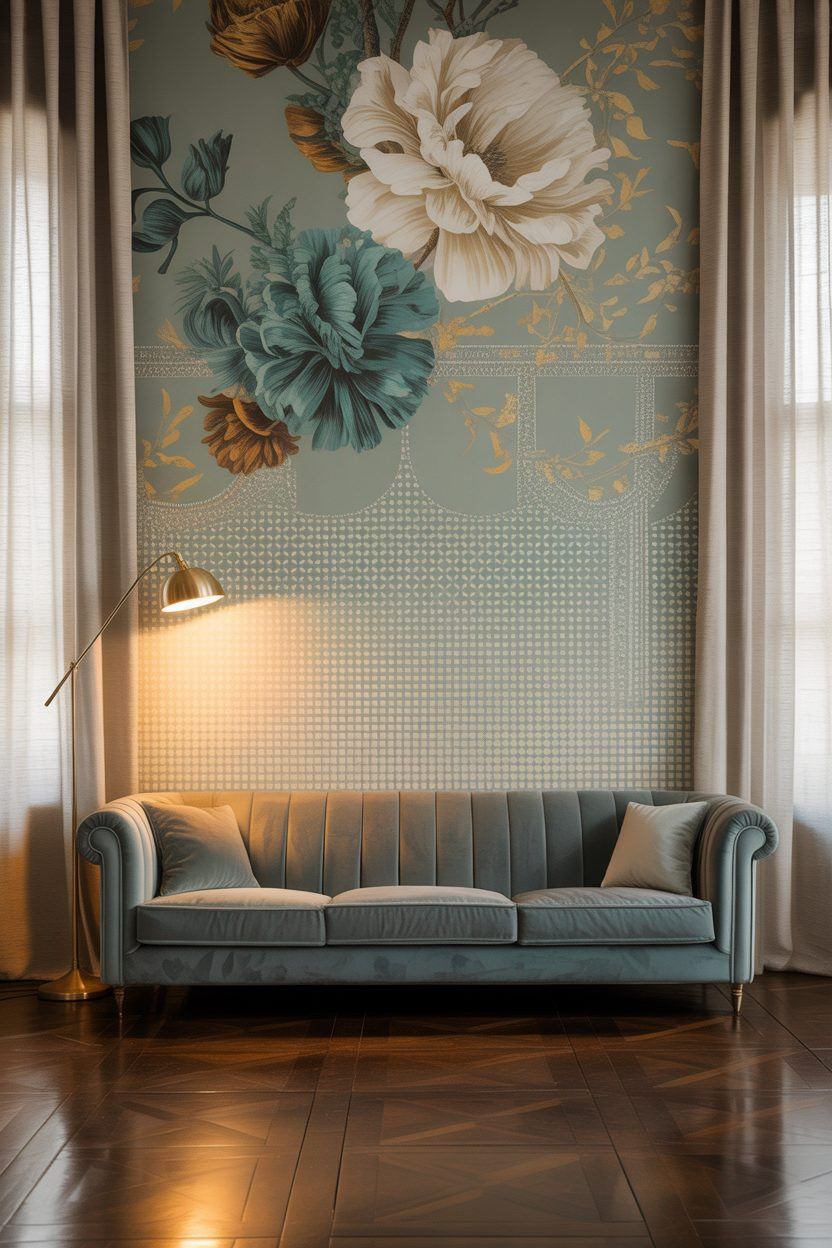
Blues are the overachievers of the color world. They’re calming, sophisticated, and work with almost everything. Navy feels classic and grounding. Soft blues feel fresh and airy. And here’s a pro tip: blue wallpaper photographs beautifully, which matters more than we’d like to admit in our Instagram age.
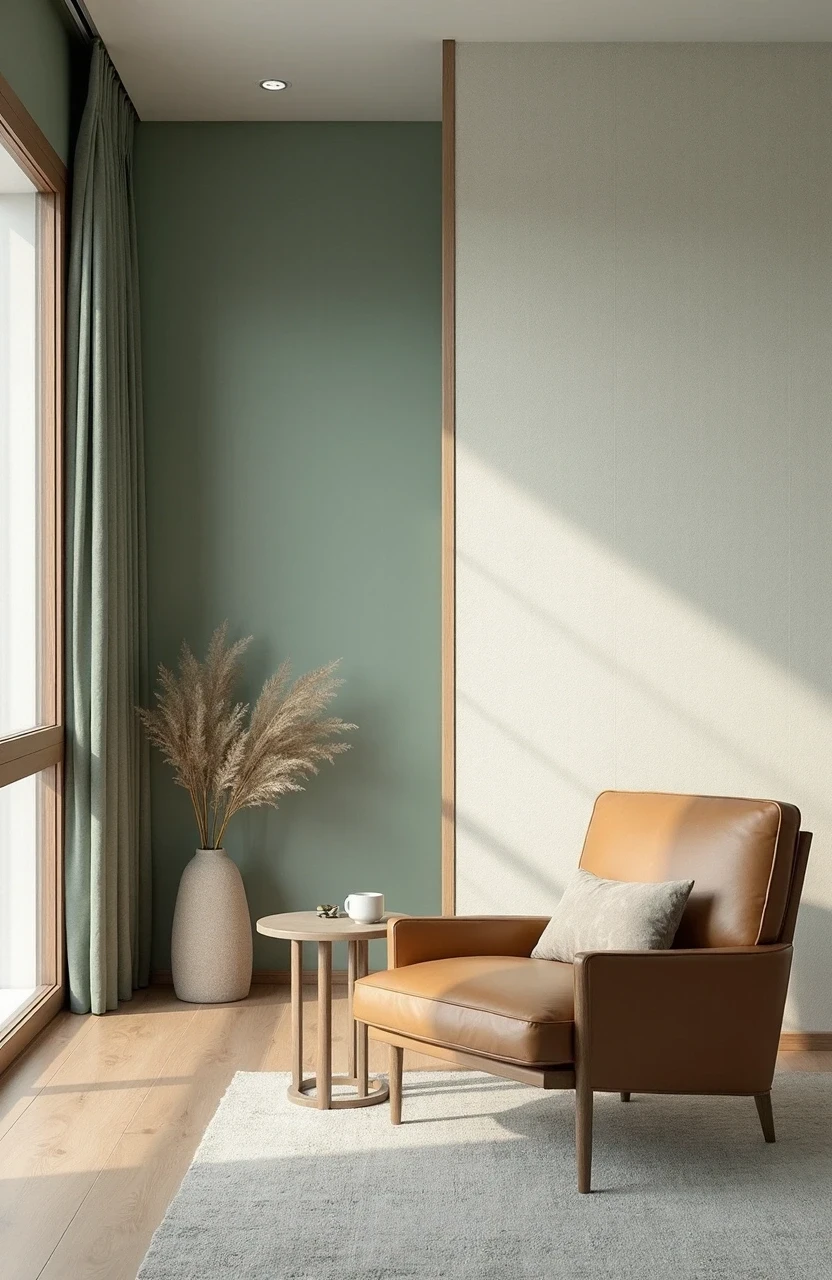
Greens are having a major moment. From sage to emerald, green wallpaper brings the outdoors in without feeling literal about it. It’s restful without being boring, and it plays well with both warm and cool accent colors.
Warm neutrals – think mushroom, taupe, warm gray – are safe choices that aren’t boring choices. They’re like the perfect little black dress: always appropriate, endlessly versatile, and they make everything else look better.
Bold colors require confidence, but the payoff is huge. Deep jewel tones like emerald or sapphire create intimacy and drama. Just remember: bold walls mean the rest of your decor needs to complement, not compete.
And those trending colors you see everywhere? Be careful. That millennial pink might feel dated faster than you think. If you love a trendy color, consider using it in accessories instead of wallpaper – or choose a version that feels more timeless.
Material Matters: Choosing the Right Wallpaper Type
Not all wallpapers are created equal, and choosing the wrong type is like buying a silk blouse for gardening – it just won’t end well.
Vinyl wallpaper is the workhorse of the wallpaper world. It’s durable, washable, and perfect for living rooms that see a lot of action. Got kids? Pets? A tendency to spill wine during Netflix binges? Vinyl is your friend.
Non-woven wallpaper is easier to install and remove, which matters if you’re the type who likes to change things up. It’s also more breathable than vinyl, so it’s less likely to peel in humid conditions.
Traditional paper wallpaper offers the most beautiful textures and prints, but it’s also the most delicate. It’s gorgeous, but think twice if your living room gets a lot of wear.
Grasscloth and natural fiber wallpapers bring incredible texture and warmth. They’re like the cashmere of wallpapers – luxurious and beautiful, but they require gentle handling and aren’t great for high-traffic areas.
Peel-and-stick wallpaper has come a long way from those dorm room disasters. Today’s removable wallpapers look sophisticated and are perfect for renters or commitment-phobes. Just manage your expectations – they won’t have the same longevity as traditional wallpaper.
Pattern Mixing Without the Madness
Here’s where things get interesting. Mixing patterns in your living room wallpaper scheme isn’t just possible – it’s how you create a space that feels collected over time rather than bought all at once.
The secret is the 60-30-10 rule. If your wallpaper is your dominant pattern (60%), choose a secondary pattern for about 30% of your textiles – maybe throw pillows or a rug. Then add a small dose (10%) of a third pattern in accessories.
Scale is everything. If your wallpaper has a large pattern, your other patterns should be medium or small. Think of it like a conversation – everyone can’t talk at the same volume at the same time.
Successful pattern combinations:
- Large floral wallpaper + medium stripe pillows + small geometric throw
- Geometric wallpaper + organic shapes in art + subtle texture in curtains
- Subtle textural wallpaper + bold patterned rug + mixed pillow patterns
And here’s something most design rules won’t tell you: sometimes breaking the rules creates the most interesting spaces. Trust your eye. If it feels right to you, it probably is.
Installation Realities: What You Need to Know
Let’s talk about the elephant in the room – actually getting that wallpaper on your walls.
DIY vs. Professional Installation isn’t just about skill level. It’s about time, patience, and honestly assessing your own limitations. Some wallpapers are forgiving. Others will humble you quickly.
Good candidates for DIY:
- Peel-and-stick wallpaper
- Pre-pasted wallpaper
- Simple patterns that don’t require precise matching
Call in the pros for:
- Expensive wallpaper (the cost of professional installation is less than the cost of ruining beautiful wallpaper)
- Complex patterns that need perfect alignment
- Textural wallpapers that require special handling
Preparation is everything. Clean walls, smooth surfaces, and proper primer aren’t suggestions – they’re requirements. Skipping prep work is like building a house on sand. It might look fine initially, but problems will appear.
Sample first, always. Order large samples and live with them for at least a week. Look at them in different lights, at different times of day. What looks sophisticated in afternoon light might feel overwhelming under evening lamps.
Budgeting for Beautiful: Making Your Money Count
Wallpaper costs can range from “reasonable splurge” to “small car payment,” so let’s talk strategy.
Price ranges you can expect:
- Peel-and-stick: $25-60 per roll
- Standard wallpaper: $30-100 per roll
- Designer wallpaper: $100-300+ per roll
- Luxury/specialty: $300+ per roll
Money-saving strategies that don’t compromise style:
- Use expensive wallpaper on one accent wall, paint the others
- Mix high-end wallpaper with budget-friendly coordinating elements
- Shop end-of-line sales from reputable retailers
- Consider high-quality peel-and-stick for similar looks at lower costs
Don’t cheap out on: samples, proper tools, or professional installation for expensive papers. These aren’t places to save money – they’re investments in getting it right.
Splurge wisely: If you’re going to spend big, do it on wallpaper for the wall you see most when you enter the room. That’s where you’ll get the most impact for your investment.
Maintenance and Longevity: The Long Game
Nobody wants to talk about wallpaper maintenance, but here’s the thing – choosing low-maintenance options means your beautiful walls stay beautiful.
Cleaning considerations vary dramatically by wallpaper type. Vinyl can handle gentle scrubbing. Natural fibers might require professional cleaning. Paper wallpapers? A light dusting is about all they can handle.
Fading happens, especially in rooms with lots of natural light. UV-resistant wallpapers cost more upfront but save money long-term. And here’s a pro tip: keep extra wallpaper for repairs. Dye lots change, and what seems like a perfect match now might be impossible to find later.
Plan for change. Even if you love your wallpaper choice, your tastes will evolve. Removable options give you flexibility. Traditional wallpaper requires commitment – make sure you’re ready for it.
Your Walls, Your Way
Choosing the perfect living room wallpaper isn’t about following rules perfectly – it’s about understanding them well enough to break them intentionally. Trust your instincts, sample generously, and remember that the best wallpaper choice is the one that makes you happy every time you walk into your living room.
Your walls are waiting. Make them wonderful.