
How to Pair Curtains and Blinds Without Clashing
Ever stared at your naked windows wondering how to dress them up? You’re not alone.
Window treatments can make or break a room’s aesthetic. But combining curtains and blinds? That’s next-level decorating.
When done right, pairing curtains with blinds can:
- Add depth to your windows
- Provide better light control
- Enhance privacy
- Create a polished, designer look
But how do you avoid the dreaded “too much” syndrome that makes your windows look overdressed and your room feel cluttered?
Let’s dive into the art of pairing curtains and blinds for windows that whisper elegance rather than scream confusion.
Understanding Why You’d Want Both Curtains and Blinds
Before we jump into how to pair them, let’s talk about why you’d want both. It’s not just about being extra.
Blinds offer precision light control and privacy, while curtains bring softness, color, and drama. Together, they’re like the perfect power couple of window treatments—functional AND fashionable.
Think of blinds as the practical foundation and curtains as the stylish finishing touch. Your windows deserve both, don’t they?
Choosing the Right Blind Style
Starting with blinds makes sense since they’re typically mounted closer to the glass. The style you choose sets the foundation for your window treatment combo.
Popular blind styles to consider:
- Venetian blinds: Classic horizontal slats that offer excellent light control
- Roman blinds: Fabric blinds that fold up neatly when raised, adding texture
- Roller blinds: Simple, clean lines that disappear into a roll when not in use
- Cellular/honeycomb blinds: Energy-efficient option with a distinctive textured look
- Vertical blinds: Perfect for sliding doors or large windows
Pro tip: For a cohesive look, match your blind color to your trim or go slightly darker for subtle contrast.
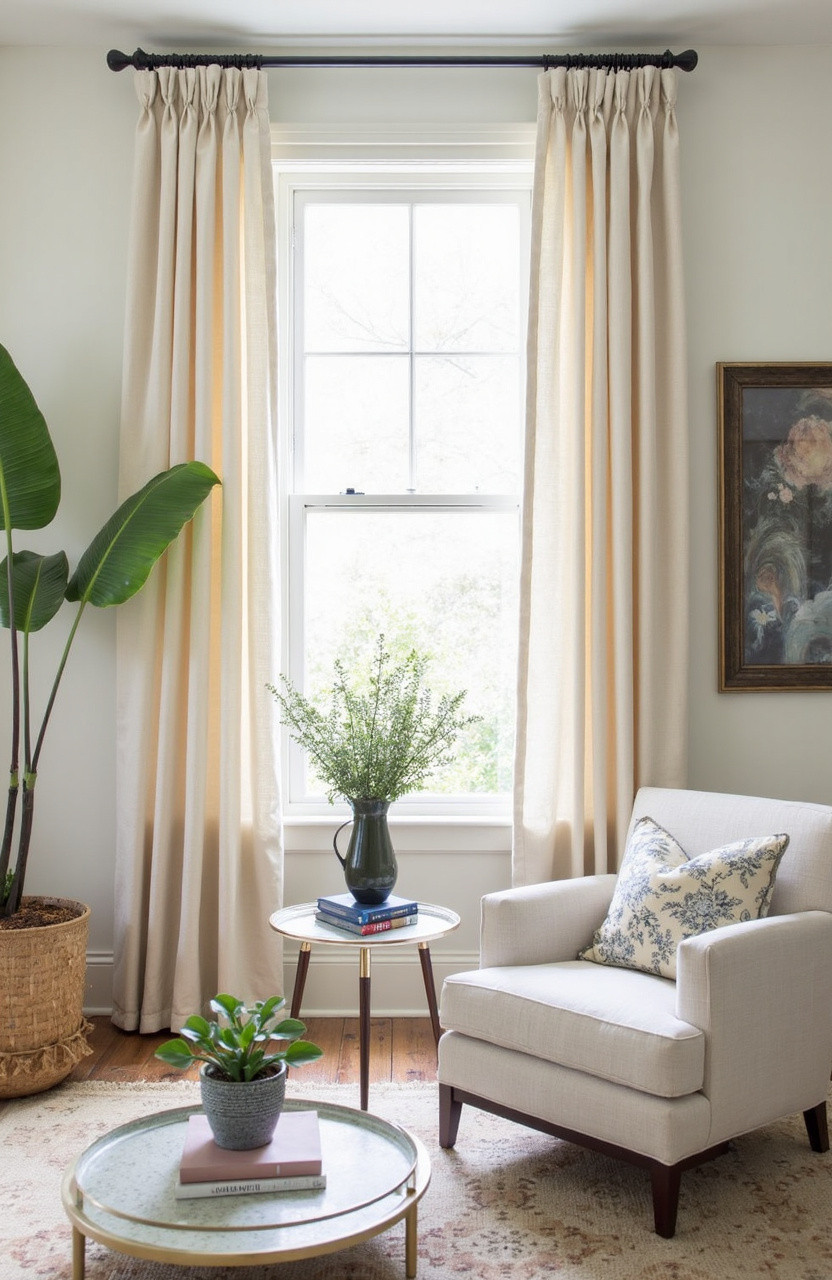
Selecting Complementary Curtains
Once you’ve nailed down your blind style, it’s time for the fun part—choosing curtains that’ll play nice with them.
Your curtains should complement, not compete with your blinds. Think of them as dance partners—they need to move well together.
When selecting curtains to pair with blinds, consider:
- Weight and texture: Heavier blinds (like wooden venetians) pair beautifully with lighter curtains. Lightweight blinds work well with more substantial curtains.
- Color coordination: Your curtains can either match your blinds for a monochromatic look or provide thoughtful contrast. Just make sure they share at least one color with something else in the room.
- Pattern play: If your blinds are solid, patterned curtains can add visual interest. If your blinds have a pattern (like some roman styles), solid curtains usually work best.
Remember, curtains are your chance to inject personality into your window treatments. Don’t be afraid to make a statement—as long as it’s speaking the same design language as your blinds.
Mastering the Color Combo
Color is where many curtain-blind pairings go wrong. Too similar but not quite matching? Awkward. Too contrasting without purpose? Chaotic.
Here’s your color cheat sheet:
| Approach | Description | Best For |
|---|---|---|
| ———- | ————- | ———- |
| Tone-on-tone | Different shades of the same color | Elegant, calming spaces |
| Neutral + pop of color | Neutral blinds with colorful curtains | Adding interest without overwhelming |
| Complementary colors | Colors opposite on the color wheel | Bold, energetic rooms |
| Monochromatic | Same color in same shade | Clean, minimalist aesthetics |
The safest bet? Choose blinds in a neutral tone (white, cream, gray, beige) and let your curtains bring the color. This approach rarely fails.
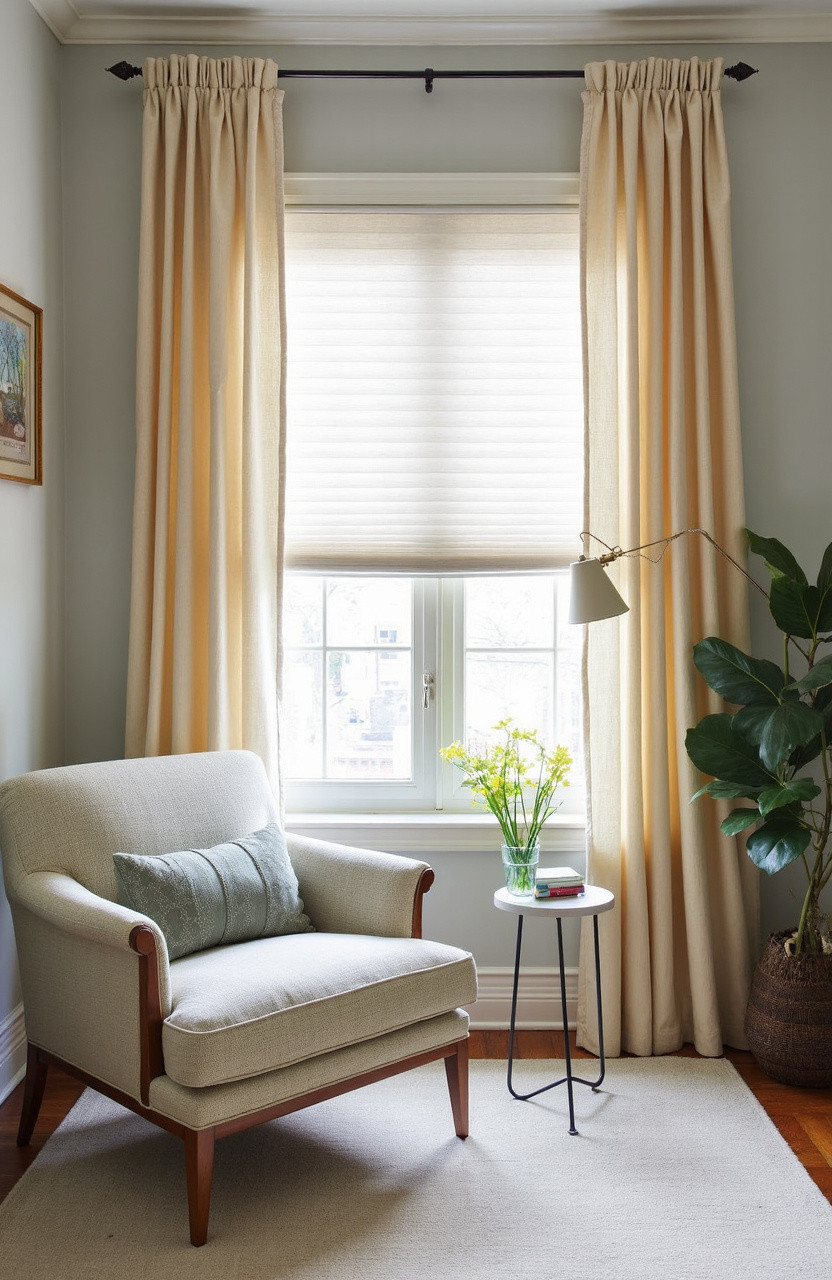
Balancing Textures for Visual Interest
Texture is the unsung hero of successful curtain and blind combinations. It adds dimension and prevents even matching colors from looking flat.
Think of texture as adding another layer of contrast that keeps things interesting:
- Smooth, sleek blinds + nubby linen curtains
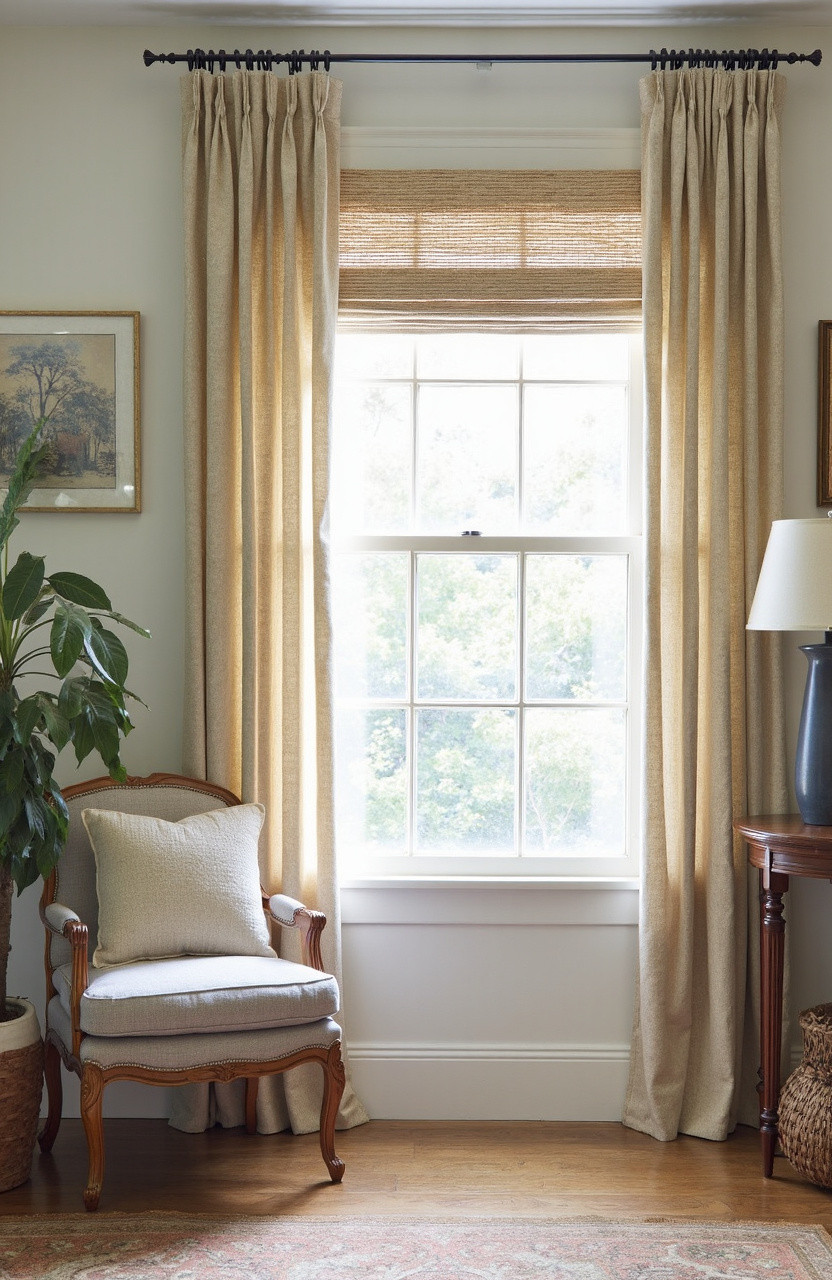
- Textured woven wood blinds + silky curtains
- Bamboo blinds + cotton or velvet curtains
And don’t forget about trim! Curtains with decorative borders or tassels can add that extra bit of personality that elevates the whole look.
Proper Hanging Techniques
How you hang your curtains can make or break your curtain-blind pairing. Get the mechanics right, and everything else falls into place.
For the perfect installation:
- Mount blinds inside the window frame or just above it
- Hang curtain rods 4-6 inches above the window frame (or higher for more drama)
- Extend curtain rods 8-12 inches beyond window width on each side
- Choose curtains long enough to either kiss the floor or puddle slightly
This approach creates height and ensures your windows look larger than they actually are. Who doesn’t want that optical illusion?
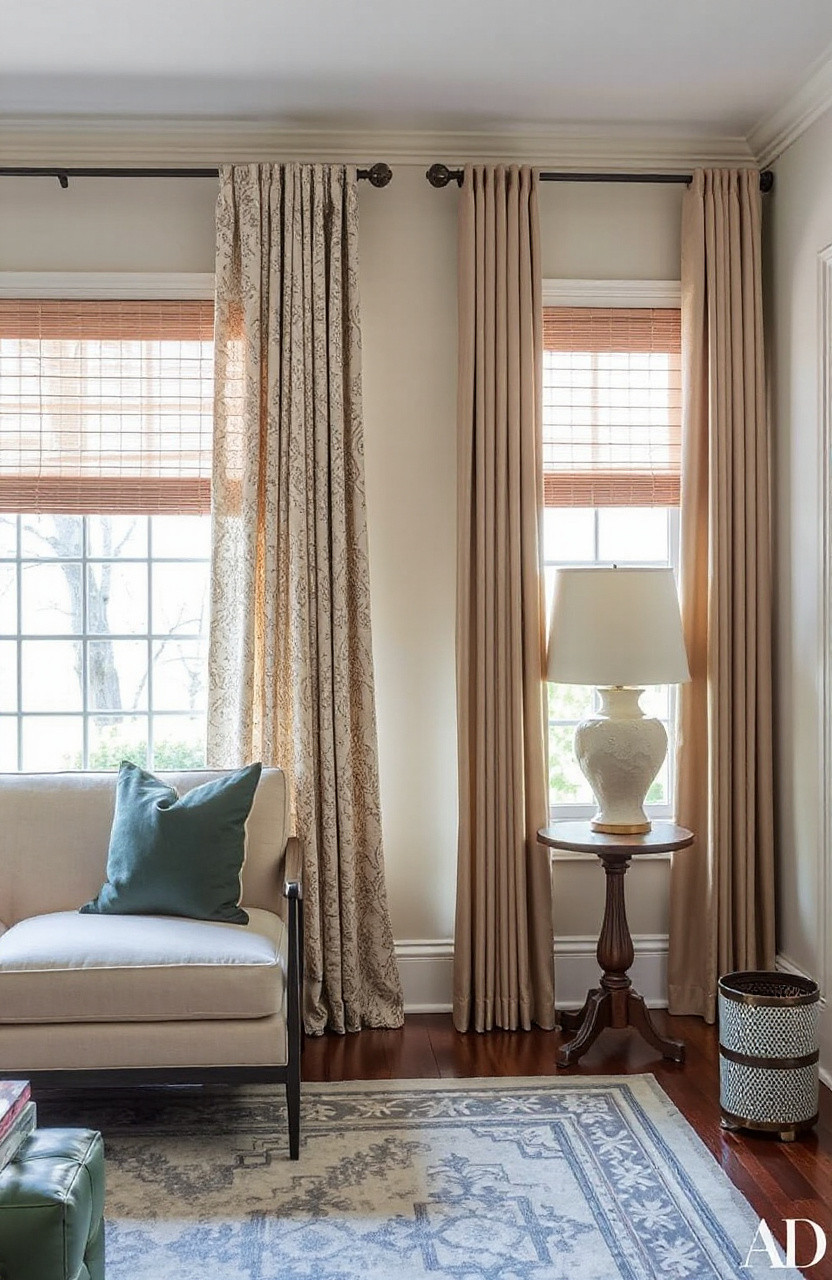
Layering Techniques That Actually Work
Layering window treatments is like layering clothes—there’s a method to avoiding the “I’m wearing everything in my closet” look.
Foolproof layering approaches:
The Classic Layer
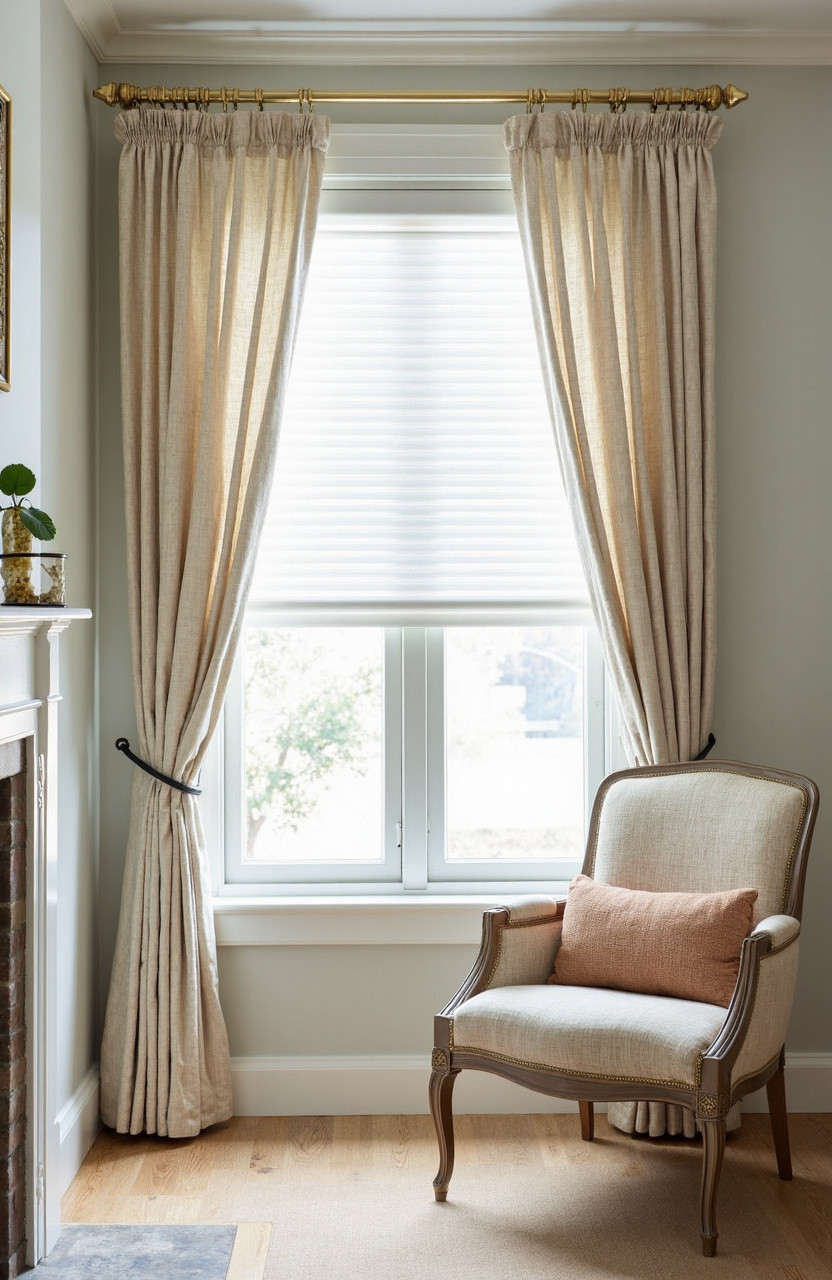
Inside-mounted blinds + floor-length curtains hung high and wide. Timeless and works in virtually any room.
The Double Curtain
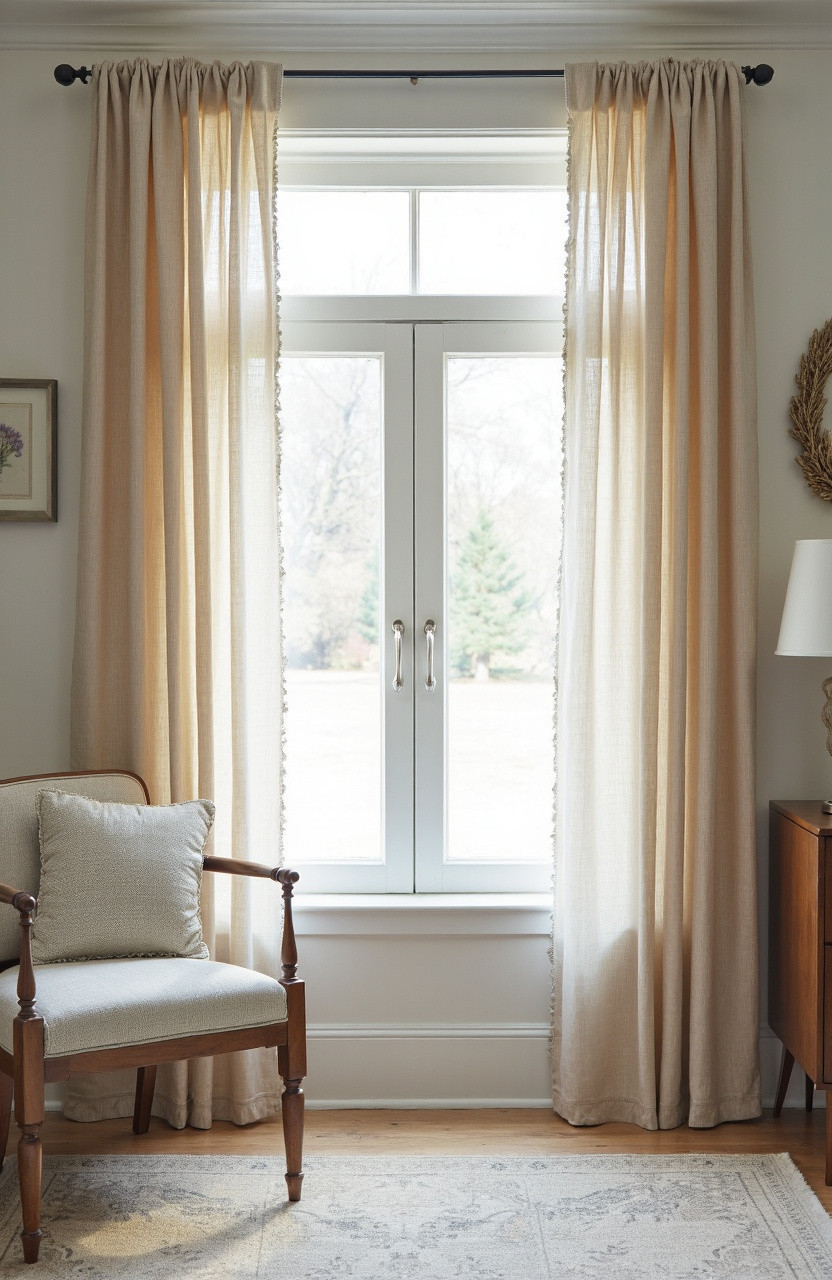
Sheer curtains closest to the window + heavier curtains on the outside. Perfect for rooms where you want light filtering options.
The Valance Addition
Blinds + curtains + a decorative valance or cornice box. Adds formality and works well in dining rooms or traditional spaces.
Remember: The goal is intentional layering, not window treatment hoarding!
Coordinating with Your Room’s Style
Your window treatments should feel like they belong in your room, not like they showed up to the wrong party.
Style-specific suggestions:
- Modern/Minimalist: Slim roller blinds + simple panel curtains in similar tones
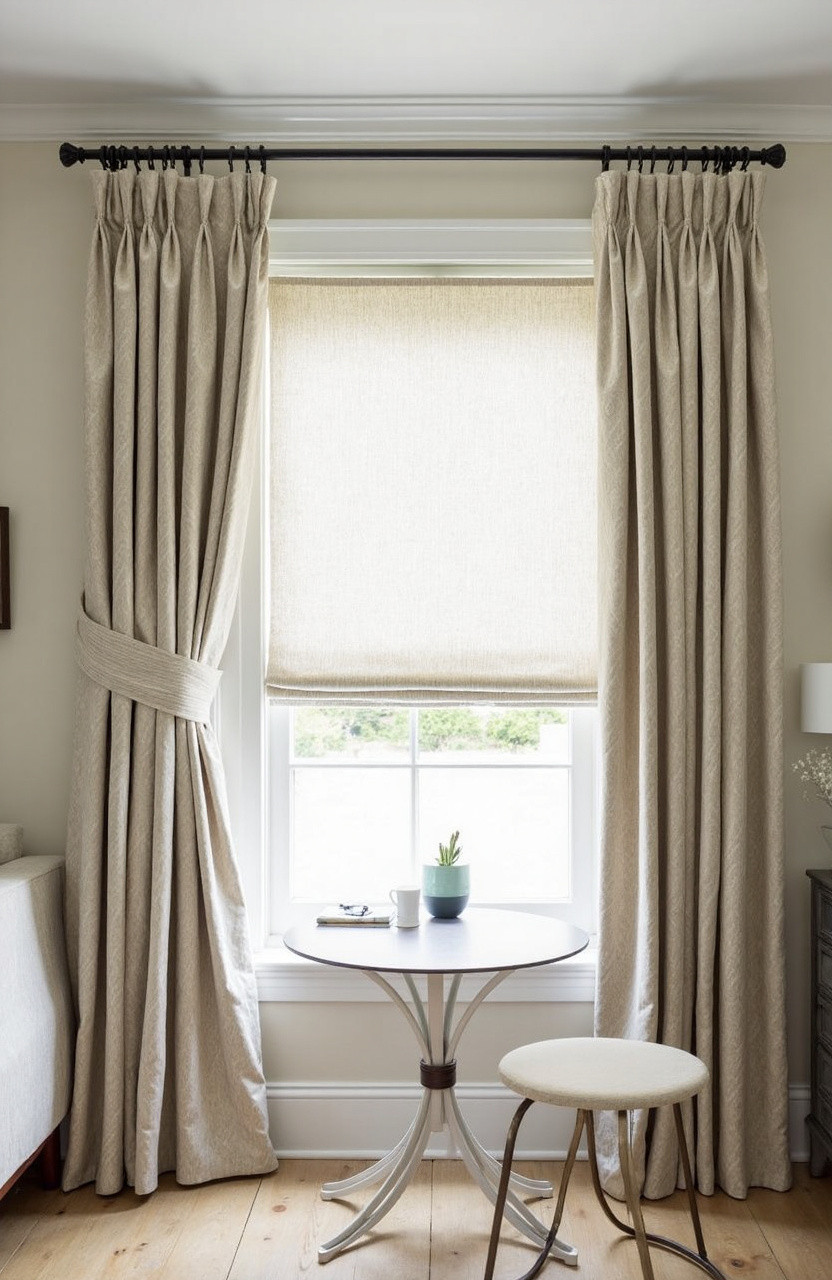
- Traditional: Wood blinds + full, pleated curtains with tiebacks
- Farmhouse: Woven blinds + white or neutral linen curtains
- Boho: Bamboo blinds + colorful, patterned curtains
- Coastal: Light-filtering cellular blinds + breezy, blue-toned curtains
Pro tip: Look at the existing lines in your room. If you have lots of straight lines and geometric patterns, consider curtains that echo those shapes. If your space is more organic with curved furniture, softer curtain styles will maintain that flow.
Room-Specific Considerations
Different rooms have different needs, and your window treatment combos should reflect that.
Living Room
Balance form and function. Consider light control for TV viewing while maintaining an elegant appearance.
Bedroom
Prioritize blackout options. Layer blackout blinds with heavier curtains for the best sleep-friendly environment.
Kitchen
Practicality rules. Washable roman blinds paired with café curtains keep things functional but still stylish.
Bathroom
Privacy and moisture resistance are key. Waterproof blinds + light, airy curtains that won’t trap moisture work best.
The room’s purpose should always influence your choice of materials, opacity, and even how the treatments open and close.
Budget-Friendly Approaches
Style doesn’t have to break the bank. There are plenty of ways to achieve the layered look without maxing out your credit card.
Money-saving strategies:
- Start with inexpensive blinds from big box stores and invest more in quality curtains
- DIY your curtains using hemming tape instead of sewing
- Shop end-of-season sales for high-end curtains at discount prices
- Use tension rods inside window frames for an inexpensive way to layer sheer curtains behind blinds
- Dress up plain blinds with ribbon trim or decorative tape for a custom look
Remember, you can always upgrade in phases. Start with the rooms where you spend the most time and work your way through the house as your budget allows.
Common Mistakes to Avoid
Even design pros occasionally stumble when pairing curtains and blinds. Here’s what NOT to do:
- Competing patterns: Bold pattern on both blinds and curtains is usually too much
- Proportion problems: Skimpy curtains with substantial blinds (or vice versa) look unbalanced
- Functional failures: Treatments that look great but make it impossible to actually open the window
- Mounting mishaps: Hanging everything at the same height, creating a cramped look
- Matchy-matchiness: Trying too hard to match exactly often looks more awkward than complementary contrast
The biggest mistake? Overthinking it! If you love how it looks, that confidence will show in your space.
Seasonal Switching Strategies
One of the hidden benefits of having both curtains and blinds is the ability to easily refresh your space with the seasons.
Try these seasonal switches:
- Spring/Summer: Swap heavy curtains for sheers while keeping blinds the same
- Fall/Winter: Add heavier curtains or layer multiple panels for warmth and coziness
- Holiday times: Change curtain tiebacks or add temporary trims to existing curtains
This approach gives you decorating flexibility without having to completely reinstall your window treatments.
Maintenance and Cleaning Considerations
Beautiful window pairings lose their charm when they’re dusty or stained. Plan for practicality from the start.
Different materials require different cleaning approaches:
- Fabric blinds often need professional cleaning
- Hard blinds can be wiped down or vacuumed
- Curtains may be machine washable or dry-clean only
When selecting your combinations, factor in your willingness to maintain them. No matter how gorgeous they look, if they’re a pain to keep clean, you’ll end up resenting them.
When to Call in a Professional
DIY is great, but sometimes professional help makes all the difference—especially for complex windows or high-end treatments.
Consider professional consultation or installation when:
- You have unusually shaped windows
- You need motorized options for hard-to-reach windows
- You’re investing in very expensive materials
- You’re unsure about proper measurements
- You have multiple identical windows that need consistent treatments
A pro can help you avoid costly mistakes and ensure your window treatments function as beautifully as they look.
Real-World Window Wisdom
Let’s get real—the perfect curtain and blind pairing is one that makes YOU happy every time you look at it.
Some of the most successful combinations break traditional rules but work because they’re thoughtfully executed with the room’s overall vibe in mind.
Trust your eye. If something looks off, it probably is. If something brings you joy every time you see it, that’s window treatment success.
The Final Outlook
Pairing curtains and blinds is part science, part art. The best combinations honor the functional needs of your space while creating visual harmony that enhances your overall design.
Start with the practical aspects—light control, privacy, insulation needs—then layer in the aesthetic elements that make your heart happy. When both work together seamlessly, you’ll have windows worth showing off.
And isn’t that the whole point? Windows that are so beautifully dressed they make you smile every time you look at them—whether the curtains are drawn or the blinds are down.