
15 Traditional Living Room Ideas That Still Feel Fresh
So, you’re thinking about giving your living room a little glow-up, huh? But maybe you’re torn between sticking with timeless traditional elements or going all modern. Good news – you don’t have to choose! Traditional design has evolved beyond stuffy Victorian parlors, and today’s traditional living spaces can feel both classic and contemporary.
Traditional style has staying power for a reason. It’s comfortable, familiar, and gives your home that coveted “always been here” feeling. But that doesn’t mean it has to feel like your grandma’s formal sitting room that nobody was allowed to actually sit in.
Let’s explore 15 ways to create a traditional living room that honors classic design principles while feeling totally relevant for how we live today. These ideas blend timeless elements with fresh perspectives that’ll make your space feel both sophisticated and livable.

Neutral Color Palettes with Strategic Accents
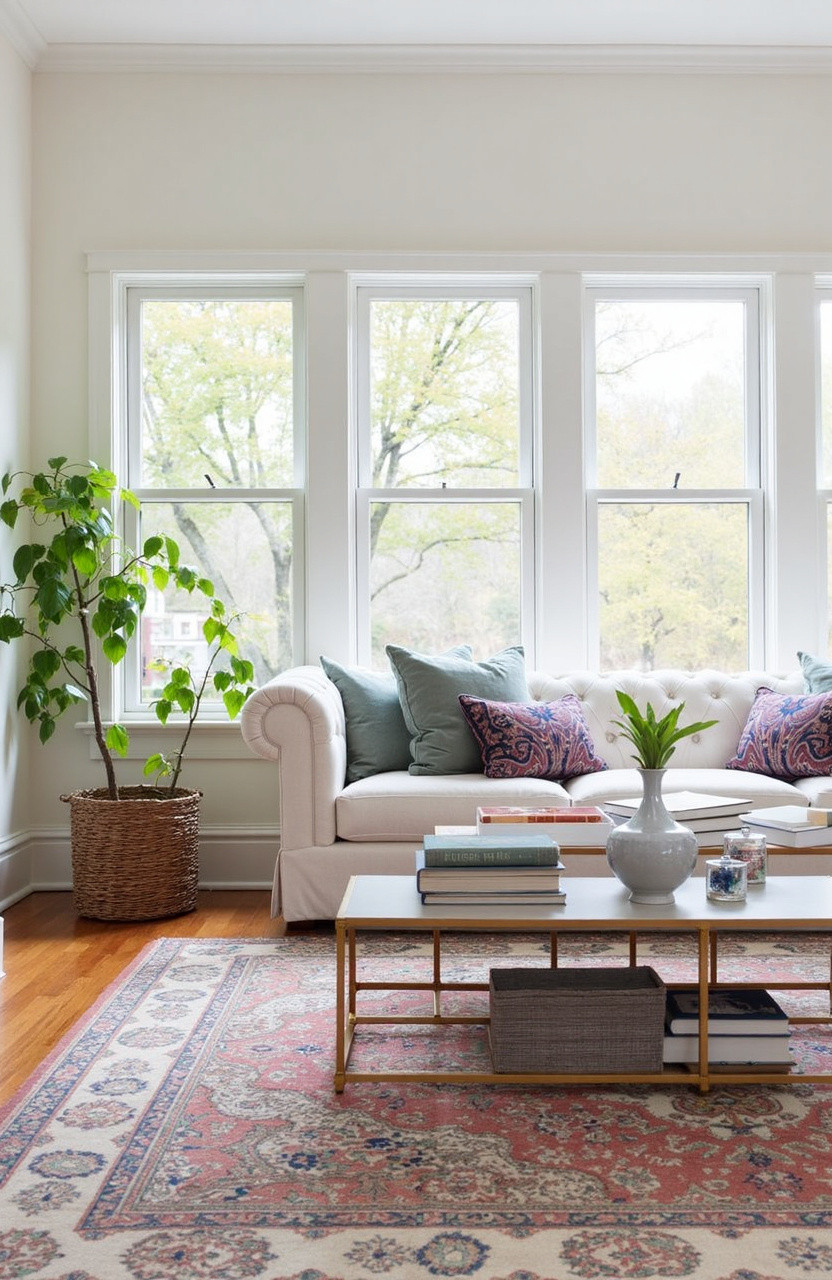
The foundation of a fresh traditional living room often starts with a neutral backdrop. Think warm whites, soft beiges, or gentle grays on your walls and larger furniture pieces. This creates a timeless canvas that won’t feel dated next season. Then, add personality through strategic color accents in pillows, artwork, or a statement chair. Navy blue, hunter green, or even a pop of coral can energize the space while maintaining that traditional vibe.
- Warm whites like Benjamin Moore’s “Simply White” create a timeless backdrop
- Consider tone-on-tone patterns for subtle texture
- Introduce 2-3 accent colors through smaller items that can be easily swapped
Updated Traditional Furniture Silhouettes
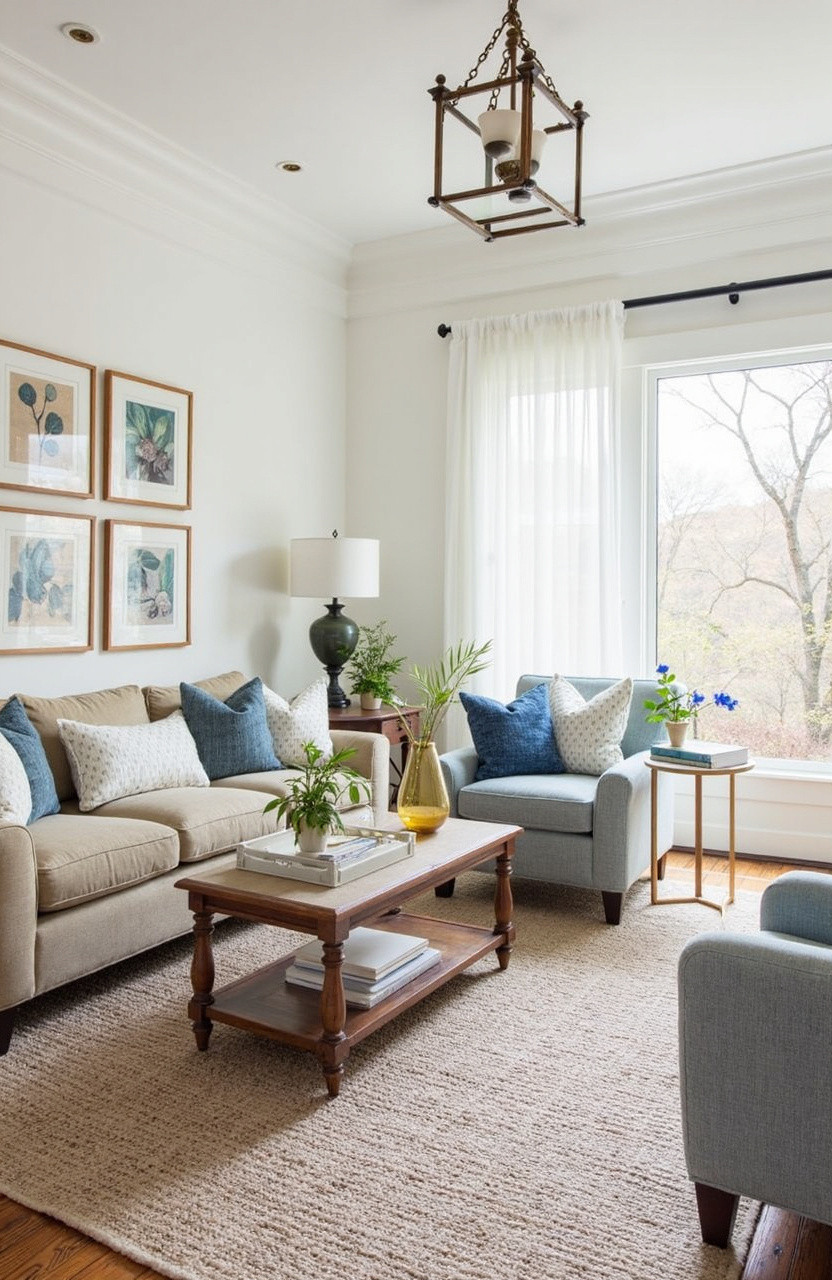
Traditional furniture with cleaner lines is the perfect compromise between classic and contemporary styles. Look for pieces that maintain traditional elements like rolled arms on a sofa or turned legs on a coffee table, but with simplified profiles. A Chesterfield sofa in a light linen rather than dark leather, or a wingback chair with less dramatic proportions feels traditional but not stuffy.
“The key is finding pieces that nod to traditional forms without being too ornate,” says interior designer Sarah Richardson. “You want the comfort and familiarity of traditional furniture without the heaviness.”
Mix and Match Wood Tones
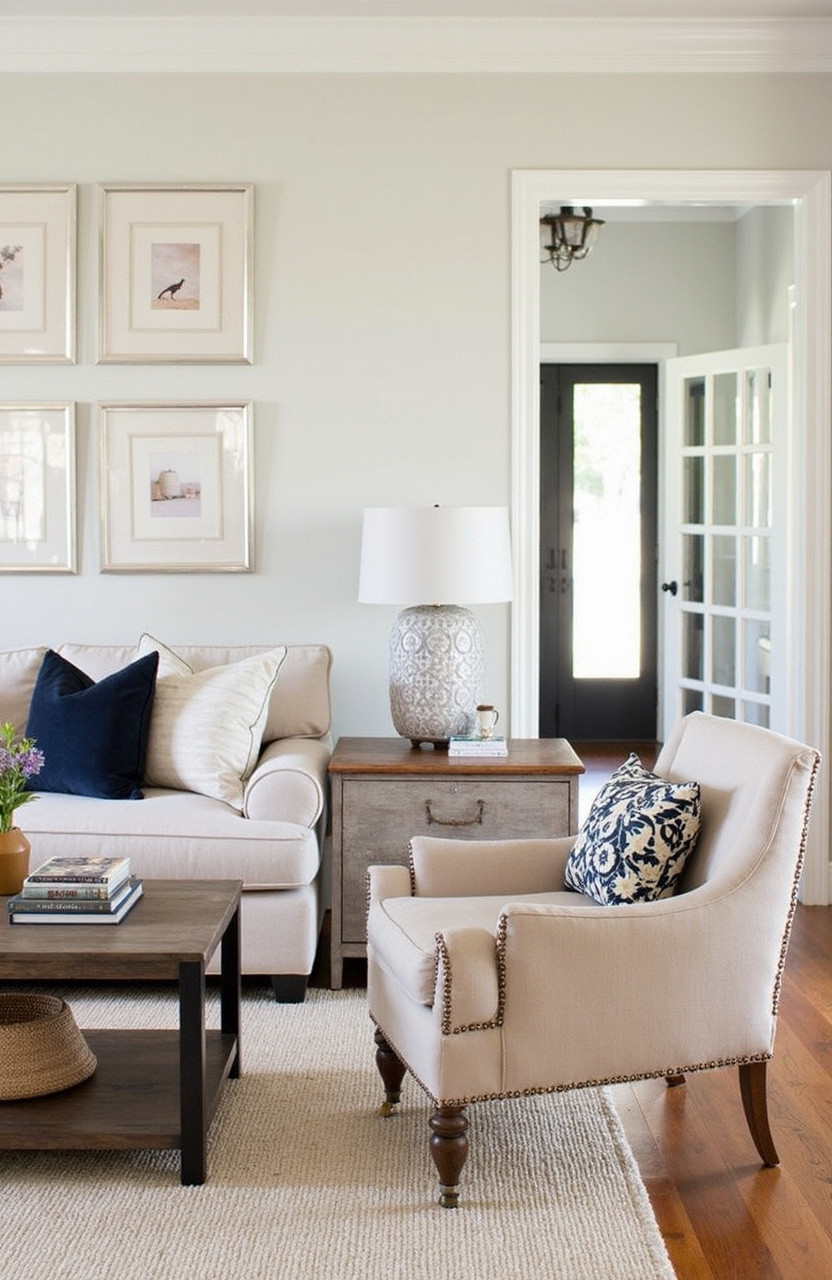
Gone are the days when all your wood needed to match perfectly. In fact, intentionally mixing wood tones creates a collected-over-time feel that’s essential to fresh traditional spaces. Try pairing a dark wood coffee table with medium-tone side tables, or introduce a lighter wood console against darker flooring.
The trick is maintaining some element of cohesion:
- Keep undertones consistent (warm with warm, cool with cool)
- Repeat each wood tone at least twice in the room
- Create visual balance by distributing darker and lighter pieces throughout the space

Incorporate Vintage and Antique Pieces
Nothing adds soul to a traditional living room quite like genuine vintage or antique pieces. These elements bring authentic character and history that new items simply can’t replicate. But to keep things fresh, limit yourself to a few standout pieces rather than filling the entire room.
A vintage Persian rug, antique side table, or heirloom portrait can serve as conversation-starting focal points. These pieces tell a story and create depth in your design that feels both traditional and deeply personal.

Updated Traditional Patterns
Traditional patterns like damask, toile, and florals are getting modern makeovers with updated scales and unexpected colorways. Consider a traditional floral pattern enlarged to an oversized scale, or a classic damask reimagined in a contemporary color combination like charcoal and blush.
You can incorporate these through:
- Throw pillows
- Drapery
- Reupholstered accent chairs
- Wallpaper (even just on one accent wall)
Architectural Details That Wow
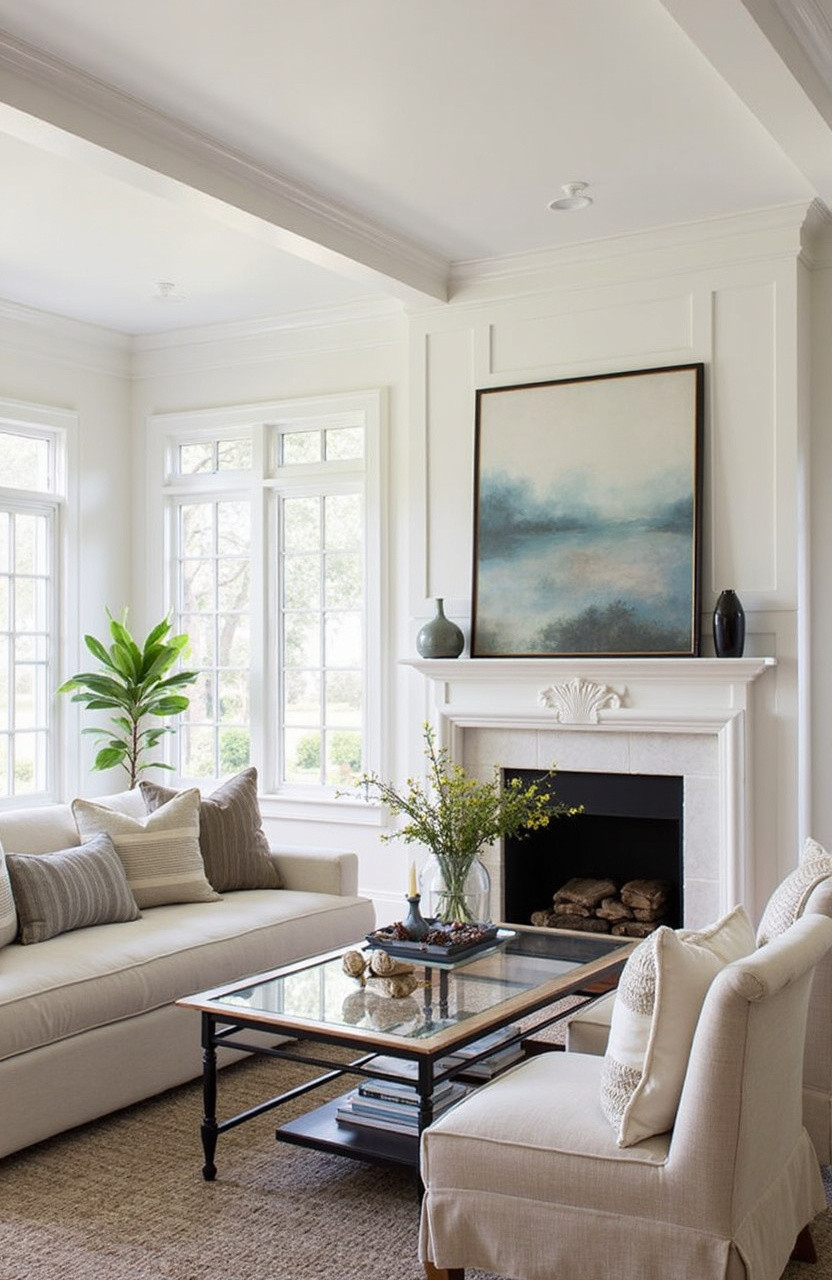
Nothing says “traditional” quite like thoughtful architectural elements. If your home lacks these features, consider adding them for instant traditional character with modern execution.
Some relatively simple additions include:
- Crown molding (with a simple profile for a more updated look)
- Picture frame molding on walls
- Built-in bookshelves flanking a fireplace or window
- Ceiling medallions or beams
These architectural details create a traditional framework for your space while allowing more flexibility with your furnishings.
Balance Symmetry with Asymmetrical Moments
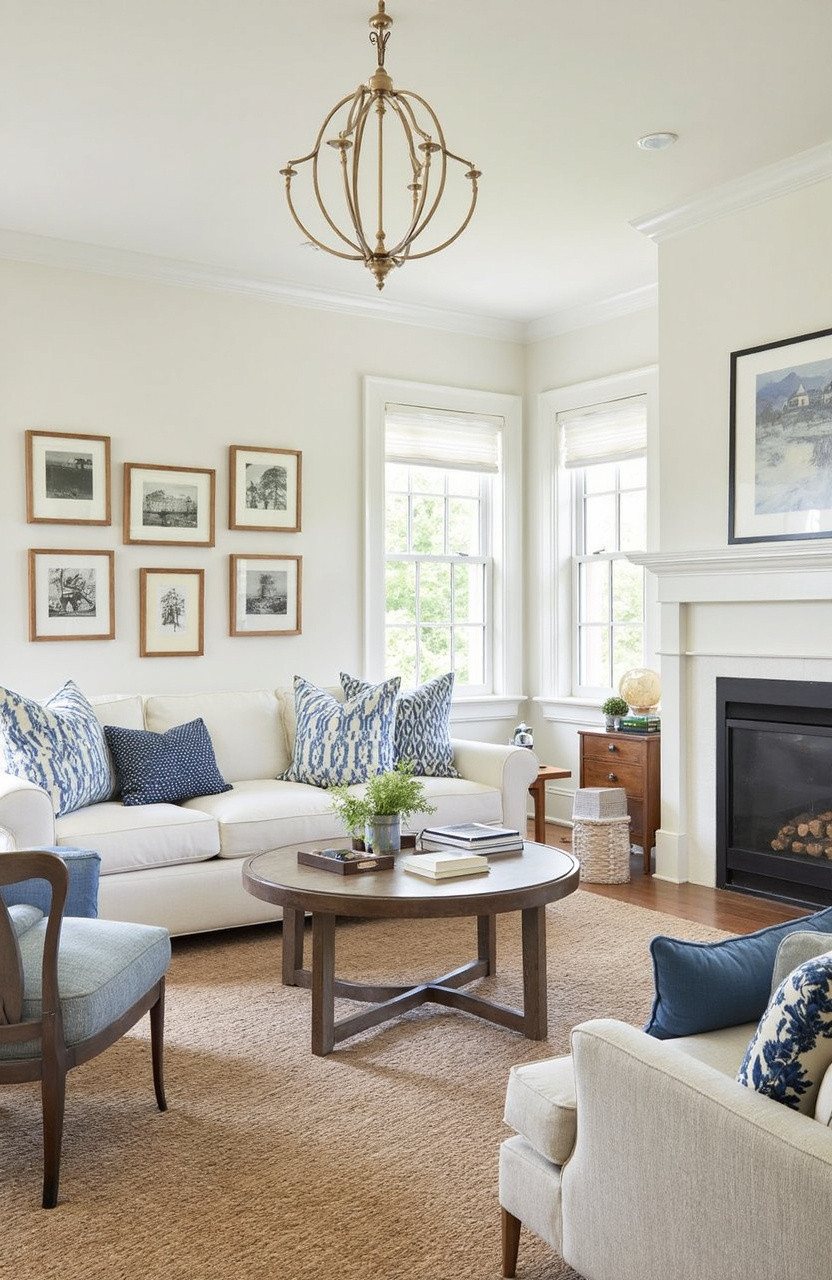
Traditional design loves symmetry – matching lamps, identical side chairs, balanced arrangements. While this creates a pleasing formality, too much symmetry can feel rigid and predictable. For a fresher take, maintain symmetry in your main furniture arrangement but introduce asymmetrical moments through accessories, art arrangements, or a statement piece.
This creates visual interest while maintaining the ordered feeling that makes traditional spaces feel so comforting.
Layered Lighting Solutions
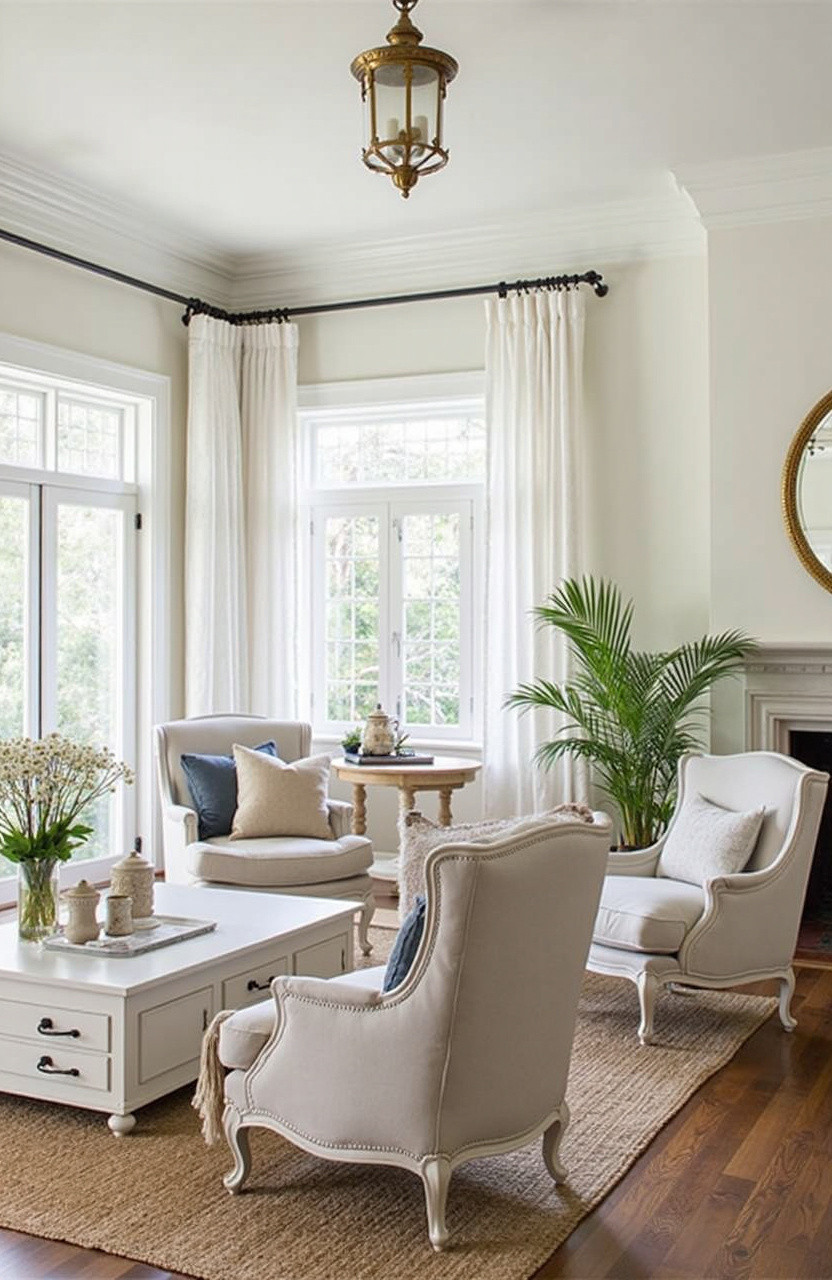
Traditional living rooms benefit tremendously from thoughtful, layered lighting. Skip the single overhead fixture in favor of a combination of lighting types:
- Ambient lighting from ceiling fixtures or recessed lights
- Task lighting from reading lamps or sconces
- Accent lighting to highlight architectural features or art
- Decorative lighting through table lamps with traditional shapes but fresh finishes
A traditional crystal chandelier updated with a modern finish like brushed brass or matte black can serve as a stunning focal point that bridges old and new.
Contemporary Art in Traditional Frames
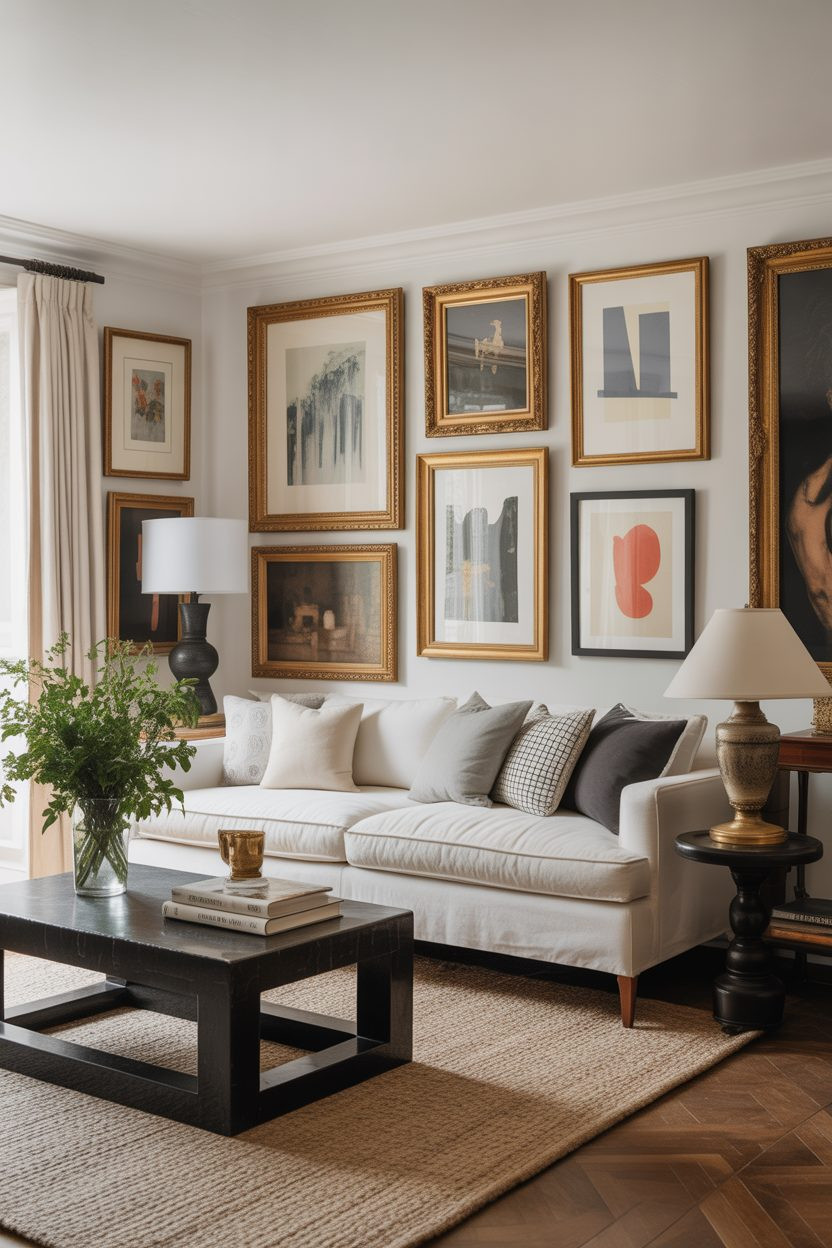
One of the quickest ways to freshen a traditional space is through unexpected art choices. Try placing contemporary or abstract artwork in traditional gilt frames, or create a gallery wall that mixes vintage portraits with modern pieces. This juxtaposition creates visual tension that makes the space feel thoughtfully curated rather than stuck in the past.
Natural Elements and Textures
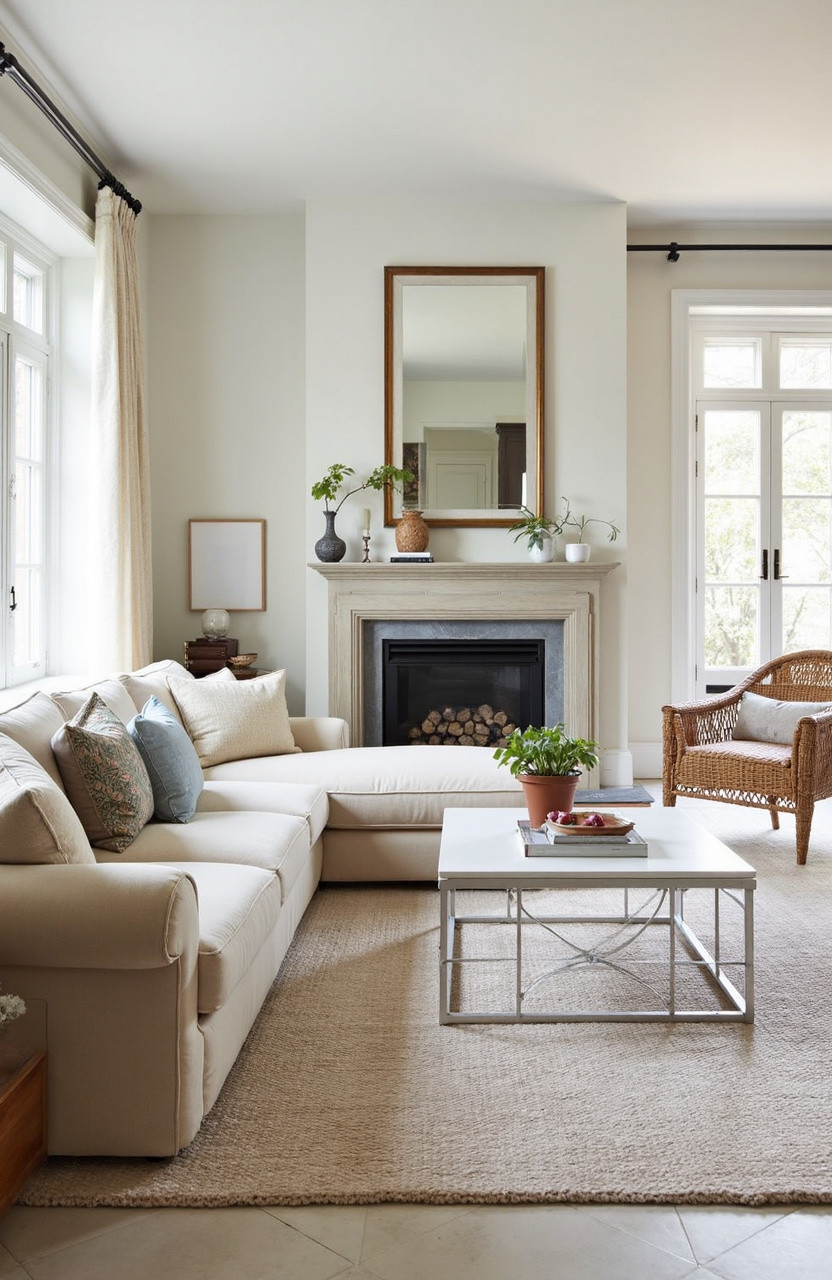
Bringing nature indoors adds life and warmth to traditional spaces. Fresh greenery, natural stone, and organic textures help traditional rooms feel grounded and current. Consider:
- Potted plants or fresh flowers
- Natural stone elements like marble or limestone
- Woven baskets for storage
- Touches of rattan or cane
- Natural fiber rugs like jute or sisal
These elements add casual comfort that balances more formal traditional elements.
Performance Fabrics in Traditional Patterns
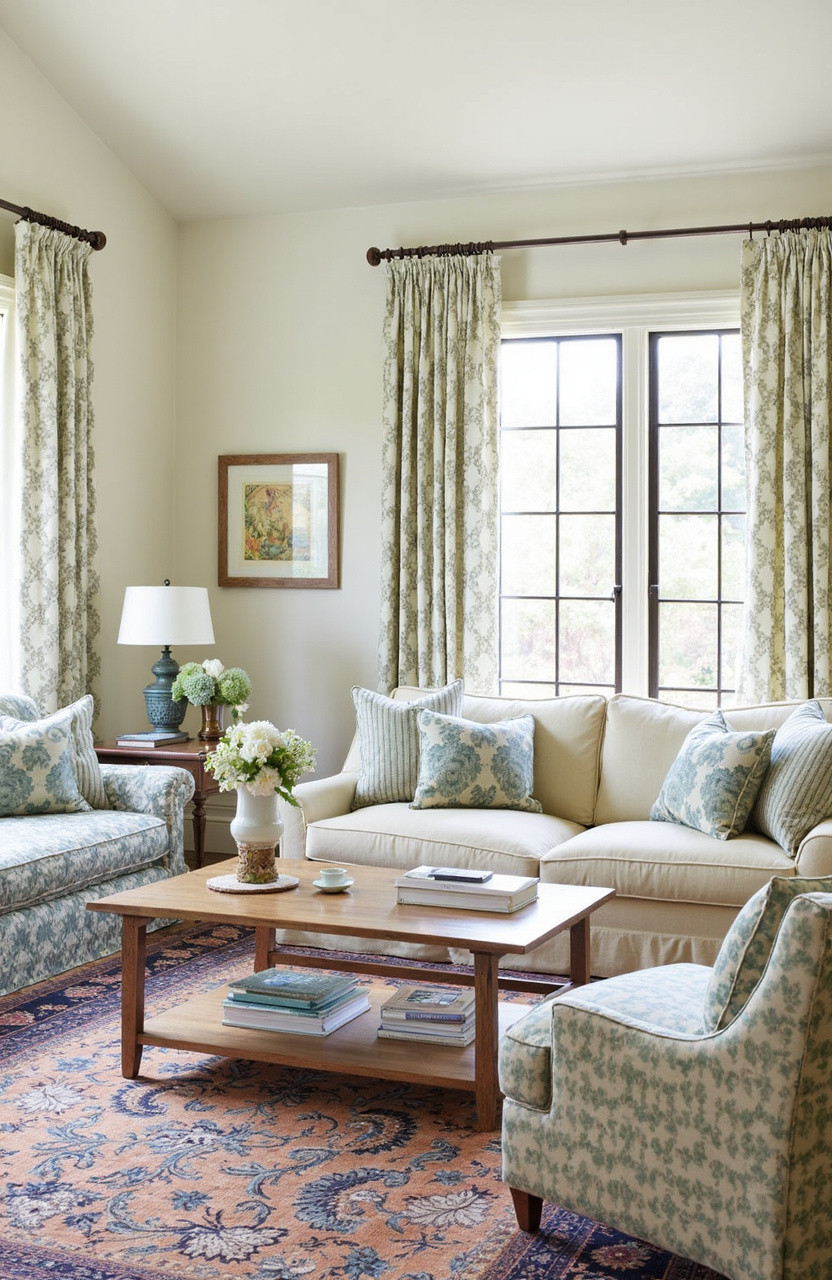
Modern technology has given us performance fabrics that can stand up to real life while maintaining the elegance of traditional textiles. Look for:
| Traditional Fabric | Modern Alternative |
|---|---|
| ——————– | ——————- |
| Silk | Performance velvet |
| Damask | Indoor/outdoor jacquard |
| Delicate cotton | Crypton or Sunbrella fabrics |
| Wool | Washable wool blends |
These innovative textiles allow you to maintain traditional patterns and textures without sacrificing practicality – perfect for homes with kids, pets, or just regular living.
Thoughtful Color Through Books and Accessories
Bookshelves filled with colorful books and carefully chosen accessories add personality and color to traditional living rooms. Instead of matching leather-bound volumes, let your actual book collection shine. Arrange books both vertically and horizontally, and intersperse with meaningful objects, framed photos, and small art pieces.
This approach creates a collected look that feels personal rather than staged – a hallmark of today’s fresh traditional style.
Updated Window Treatments
Window treatments in a traditional living room don’t need to be heavy, puddled drapes with swags and jabots. For a fresher take:
- Choose simple panels in traditional fabrics
- Opt for tailored roman shades in a classic pattern
- Consider plantation shutters for architectural interest
- Skip the valances and heavy hardware
The goal is to maintain the finished look of traditional window treatments without the fussiness.
Comfortable, Conversation-Friendly Layouts
The best traditional living rooms prioritize comfortable conversation. Arrange seating in groupings where people can easily talk without raising their voices. A classic layout includes:
- A sofa facing two chairs across a coffee table
- Additional seating pieces that can be pulled in when needed
- Side tables within reach of each seat
- Clear pathways between conversation areas
This thoughtful arrangement honors the original purpose of formal living rooms – bringing people together – while adapting to how we actually live today.
Personal Collections Displayed Thoughtfully
Traditional spaces shine when they showcase items you truly love. Rather than generic “traditional” accessories, display collections or items that tell your story. Vintage cameras, antique silver, family heirlooms, or travel souvenirs arranged thoughtfully add personality while maintaining a cohesive look.
“The best rooms are always the ones that reflect their owners,” says designer Thomas O’Brien. “Collections displayed with intention add soul to traditional spaces.”
Bringing It All Together: Your Fresh Traditional Living Room
Creating a traditional living room that feels fresh rather than fusty comes down to balance. Honor classic principles of proportion, symmetry, and craftsmanship while embracing modern comforts, technologies, and a more relaxed approach to formality.
The most successful traditional spaces feel timeless rather than trendy – they acknowledge design history while embracing how we actually live today. By combining these 15 ideas, you can create a living room that feels both classically inspired and totally livable for today’s lifestyle.